India’s proposed front-of-pack warning labels
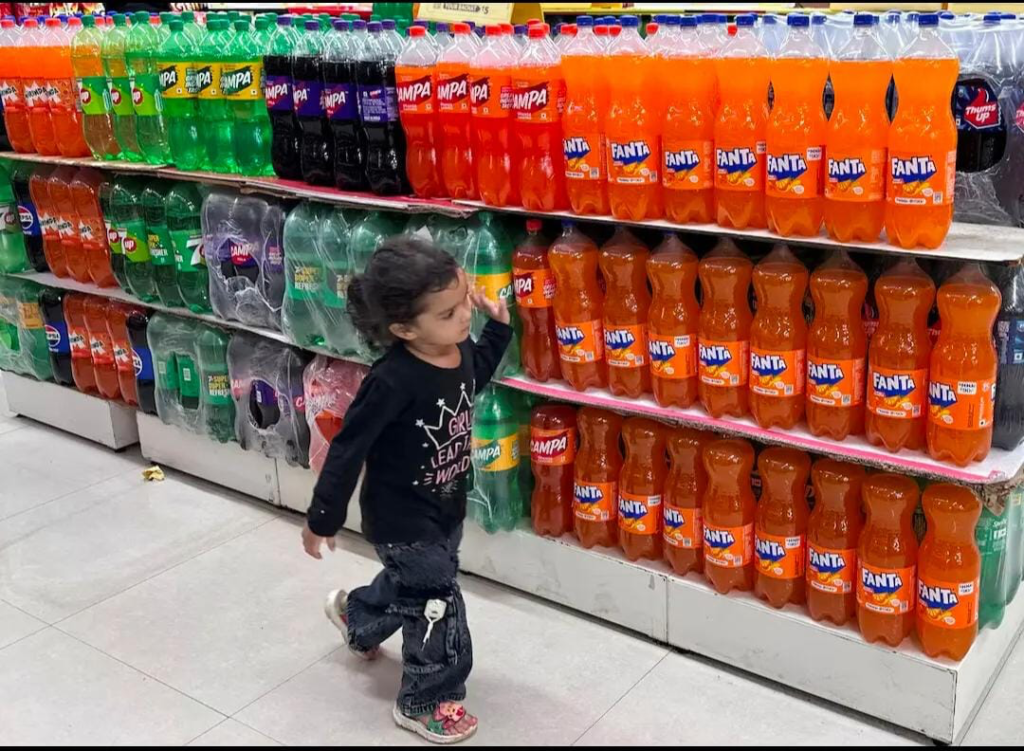
India’s plan to introduce prominent warning labels on packaged foods and beverages has become the centre of a wider debate over consumer awareness, food regulation and the influence of major food companies. The proposal was aimed at making it easier for consumers to identify products containing high levels of sugar, salt and fat, particularly items such as chips, soft drinks and other highly processed foods.
According to a Reuters investigation published on August 25, 2026, India’s Food Safety and Standards Authority of India (FSSAI) had considered colourful, front-of-pack warnings but later moved away from the approach following discussions with representatives of major food and beverage companies. The issue is now attracting renewed attention from health activists and the Supreme Court.
The proposed system would have made nutritional information more visible at the point where consumers make purchasing decisions. Instead of requiring shoppers to turn a packet around and study a detailed nutritional table, colour-coded symbols could have immediately indicated whether a product contained high levels of sugar, salt or fat.
The debate is particularly significant because India has a rapidly expanding packaged food and beverage market. Industry estimates cited by Reuters suggest that almost 80% of products in India’s packaged food and beverage sector could be considered high in fat, sugar or salt. If colour-coded warning labels were applied widely, a substantial number of products could carry prominent warnings on their packaging.
Why food companies opposed the warning-label proposal
Major food and beverage companies argued that warning symbols could oversimplify complicated nutritional information and might not significantly change consumer behaviour. During a March 19 meeting with regulators, industry representatives questioned whether consumers would actually make healthier choices simply because a warning symbol appeared on the front of a package.
Reuters reported that Coca-Cola India executive Mili Bhattacharya argued during the meeting that consumers who did not already study ingredient lists would not necessarily change their diets simply because of a symbol or icon. Industry representatives also suggested that regulators should focus more on portion control and consumer education.
The companies’ position has become an important part of the controversy because some of the same multinational food and beverage companies operate under different labelling systems in other countries. Reuters reported that Coca-Cola and its bottling partners have voluntarily used traffic-light-style nutritional labels in a number of European markets, while Nestle has used interpretive nutritional labelling in Britain.
The difference has raised questions among Indian health advocates about whether consumers in India should receive the same level of easily understandable nutritional information available in some overseas markets.
Companies have also argued that a blanket warning system could produce misleading results in certain cases. The Ind Food and Beverage Association, which represents companies including PepsiCo, said existing proposals could potentially result in a high-sugar warning on products such as coconut water because of naturally occurring sugar. The industry has therefore called for greater clarity around how such labels would work.
At the heart of the disagreement is a fundamental question: should packaged food labels simply provide nutritional data, or should they actively warn consumers when a product contains potentially concerning levels of sugar, salt or fat?
Public health concerns put the issue under greater scrutiny
Health experts and consumer activists have argued that clear front-of-pack labelling can help people make quicker and more informed decisions. Nutrition information printed in small text on the back of a packet can be difficult for consumers to interpret, particularly when they are comparing several products while shopping.
Supporters of warning labels believe a simple visual system can bridge that information gap. Around 20 countries have adopted some form of interpretive front-of-pack nutrition labelling, according to the Reuters report. Such systems can use colours or warning symbols to communicate nutritional information more directly.
The issue has become even more important amid growing concerns about obesity and unhealthy diets in India. Reuters cited a recent study published in The Lancet estimating that 450 million Indians could be overweight or obese by 2050 if current trends continue. That projection has increased pressure on policymakers to consider measures that could encourage healthier food choices.
India’s Supreme Court is also examining the regulatory decision after public health activists challenged the rollback of the proposed warning-label system. The court had earlier directed regulators to consider stronger nutritional warnings, including examining approaches used internationally.
The court’s involvement means the dispute is no longer simply a discussion between food companies and regulators. It has developed into a broader public policy question involving consumer rights, corporate interests and the government’s responsibility to protect public health.
The FSSAI later told the court that matching international approaches to food packaging would be difficult. However, judges questioned that position and stressed the importance of India’s responsibility towards the health of its citizens.
Different products, different markets
Another major aspect of the debate concerns differences between food products sold in India and similar products sold in other countries. Reuters compared the sugar content of Fanta sold in London and India and reported a substantial difference in the amount of sugar. The report also examined differences in ingredients used in products such as KitKat and Maggi across international markets.
Food companies often change recipes depending on local regulations, consumer preferences, production costs and market conditions. Such differences are not necessarily evidence of a regulatory violation, but they have nevertheless become a source of frustration for some Indian consumers who believe products sold domestically should meet similar nutritional expectations to those available overseas.
Consumer activists have increasingly used social media to draw attention to these differences. One prominent example is influencer Revant Himatsingka, popularly known online as Food Pharmer, whose videos have focused on sugar, ingredients and marketing practices in packaged foods.
The growing influence of social media has created another layer of pressure on food companies. Consumers are no longer dependent entirely on traditional advertising or packaging information. They can compare products sold in different countries, analyse ingredient lists and share their findings with millions of other consumers.
What happens next for food labelling in India
The future of front-of-pack nutrition warnings in India remains uncertain. The government and FSSAI will have to balance the concerns of food manufacturers with demands from health experts and consumer groups for clearer information.
The debate also comes at a time when India’s food regulator is taking a tougher approach to misleading food labels, advertising claims and other regulatory violations. Recent enforcement actions against food and beverage companies show that labelling and consumer information remain major priorities for the regulator.
For consumers, the controversy highlights the importance of looking beyond the front of a package. Until a stronger front-of-pack warning system is introduced, shoppers may continue to depend on nutritional tables, ingredient lists and independent information when evaluating packaged foods and drinks.
The larger question, however, is whether consumers should have to interpret complicated nutritional information themselves or whether food packaging should make potential health concerns immediately visible. As India’s packaged food market continues to expand, that question is likely to remain central to the country’s food policy debate.
The outcome could have significant implications for the food and beverage industry. Stronger warning labels could influence how companies formulate products, market them and communicate nutritional information. At the same time, clearer rules could give consumers greater confidence that they are receiving understandable information when purchasing everyday food and beverages.
For India, the debate over red warning labels is therefore about more than chips and soda. It represents a larger confrontation over transparency, consumer choice, corporate responsibility and the future direction of food regulation in one of the world’s largest consumer markets.
Follow NewsNowNation for more updates regarding business-related news and visit newsnownation.com for the latest business, corporate and industry developments.
