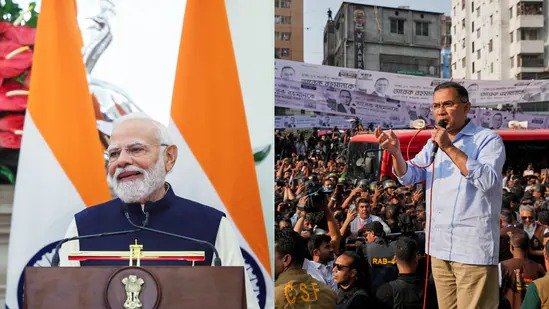
In a noteworthy diplomatic development, India has publicly extended support to Bangladesh following the recent national elections in which Tarique Rahman’s political faction emerged victorious with a significant mandate. Prime Minister Narendra Modi congratulated Rahman, emphasising the importance of peaceful, inclusive democratic processes and reaffirming the longstanding ties between the two neighbouring countries.
India’s official response underlined the need for political inclusivity and broad-based participation across all segments of Bangladeshi society, even as the elections concluded with a clear outcome. The statement issued from New Delhi highlighted that sustained cooperation and mutual respect remain essential cornerstones of India–Bangladesh relations, which encompass shared geopolitical, economic and social interests.
Diplomatic Context and Historical Ties
India and Bangladesh have maintained close bilateral engagement since Bangladesh’s independence in 1971. Over the decades, ties have strengthened across multiple domains — from economic partnerships and trade linkages to collaboration on security and connectivity. The latest electoral result marks another major chapter in this relationship, as both nations seek stable governance mechanisms that can support regional development and cooperation.
Prime Minister Modi’s message commended the Bangladeshi people for exercising their democratic rights while also emphasising India’s long-term interest in a stable and inclusive political environment in Dhaka. Analysts suggest that India’s supportive tone reflects a strategy aimed at ensuring continuity in bilateral policy coordination and avoiding disruptions that could arise from contested political outcomes.
Significance of Inclusive Politics
A key element of India’s message was the call for inclusive political participation. New Delhi emphasised that while election results represent the will of the majority, the involvement of diverse political voices contributes to the strength and legitimacy of democratic institutions. This focus on inclusivity echoes concerns across parts of South Asia where electoral processes have at times been challenged by debates over fairness and representation.
Commentators note that India’s public stance seeks to balance diplomatic goodwill with an emphasis on political inclusiveness — a message that resonates with wider international norms pertaining to democratic governance and human rights.
Potential Impact on Bilateral Cooperation
The outcome of the elections and India’s supportive response are expected to have implications for future collaboration between the countries. Key areas likely to benefit include cross-border trade facilitation, energy cooperation, transport connectivity projects, and cultural exchange initiatives. India and Bangladesh have previously worked together on major infrastructure ventures such as rail and road link improvements which have bolstered bilateral economic activity.
Furthermore, observers point out that a stable political backdrop in Dhaka can enable more substantive progress on regional initiatives under forums like the BBIN (Bangladesh, Bhutan, India, Nepal) initiative and reinforce strategic cooperation focused on shared prosperity.
Regional Stability and Strategic Interests
In extension, India’s diplomatic gesture reflects broader regional priorities, particularly in South Asia, where stability and economic integration are central themes for India’s foreign policy. A robust and inclusive political environment in Bangladesh could contribute to greater harmonisation in areas such as regional security dialogues and multilateral engagement within organisations like the South Asian Association for Regional Cooperation (SAARC).
As developments unfold in Dhaka’s political landscape, stakeholders from both countries will be watching closely how governance translates into implementation and cooperation frameworks that benefit citizens on both sides of the border.
For ongoing updates and insightful analysis on regional affairs and international diplomacy, stay connected with NewsNowNation — your trusted source for verified news from across the globe.
