

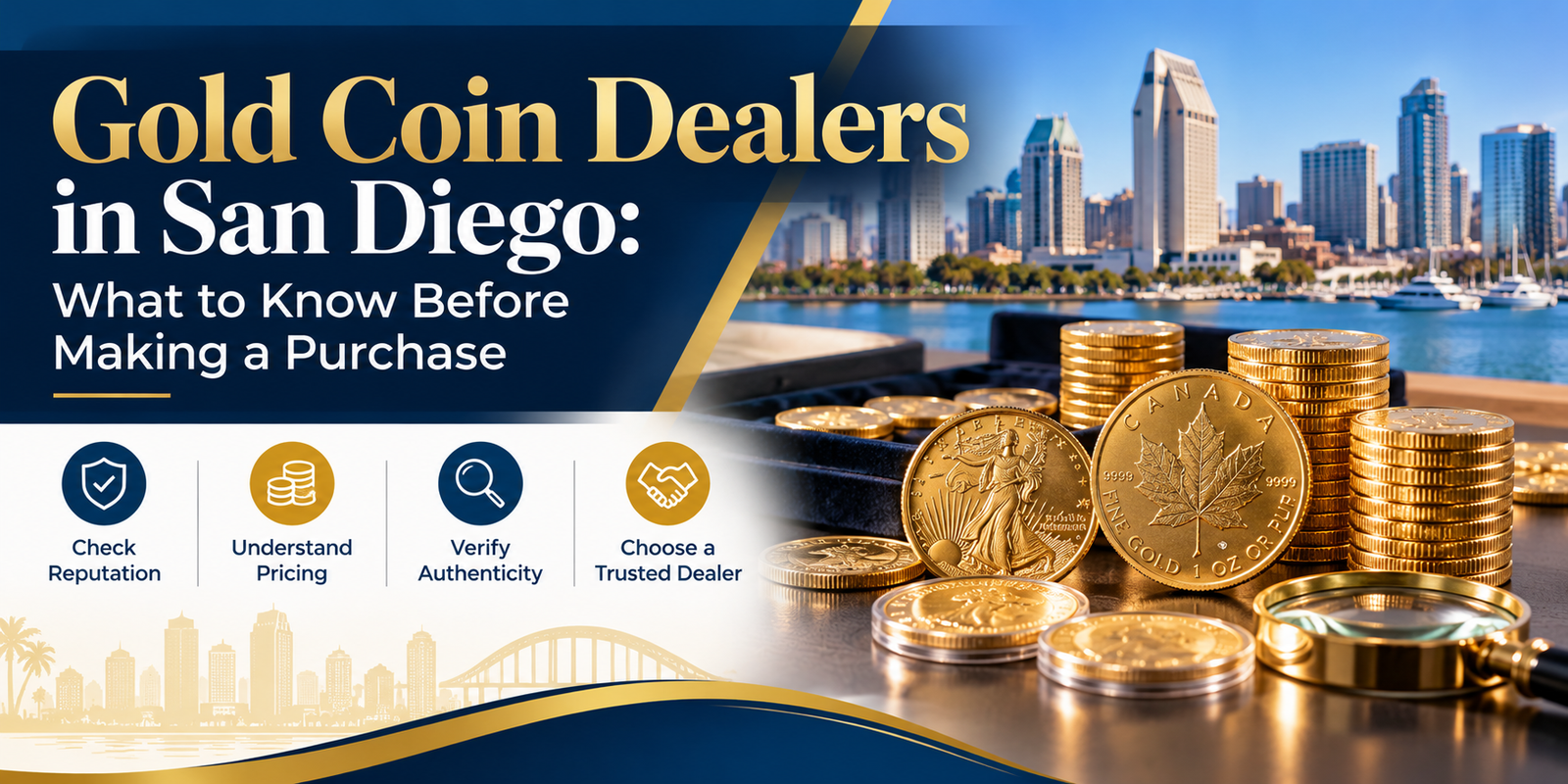
Buying gold coins can be an exciting experience, whether you are starting a collection, adding to an existing portfolio, or simply interested in owning physical gold. However, before making a purchase, it is important to understand how gold coin prices work, how to evaluate a dealer, and what separates a genuine, fairly priced coin from a potentially disappointing purchase.
For buyers in San Diego, choosing the right gold coin dealer involves more than comparing prices online. Dealers may offer different coin selections, pricing structures, authentication services, and return policies. Taking time to understand these differences can help you make a better-informed decision and avoid common mistakes.
How to Choose Gold Coin Dealers in San Diego
A reliable gold coin dealer should provide clear product information, transparent pricing, and professional customer service. Whether you are purchasing a modern bullion coin or a collectible gold coin, the dealer should be able to explain the details of the item you are considering.
Start by researching the dealer’s experience with gold coins. Some businesses specialize in bullion products, while others focus on rare, historic, or graded coins. If you are interested in a specific coin, ask whether the dealer regularly handles that type of product.
Consider these factors when comparing dealers:
- Reputation: Read recent customer reviews and look for consistent feedback about service, pricing, and product authenticity.
- Product knowledge: A knowledgeable dealer should be able to explain the coin’s weight, purity, condition, and relevant history.
- Transparent pricing: Ask for the total purchase price and an explanation of any premium above the current gold spot price.
- Authentication: Check whether the dealer provides certification or other documentation where applicable.
- Clear policies: Understand the return, refund, and exchange terms before completing your purchase.
A professional buying experience should leave you with a clear understanding of what you are paying for and why.
Understanding the Different Types of Gold Coins
Not all gold coins are purchased for the same reasons. Understanding the main categories can help you choose products that match your interests and budget.
Gold Bullion Coins
Bullion coins are generally valued primarily for their precious-metal content. Their prices typically follow the gold market, with an additional premium that reflects factors such as production, distribution, availability, and dealer costs.
Buyers often consider bullion coins when they want to own physical gold in a recognizable, standardized form. Before purchasing, verify the coin’s weight and purity, and compare the premium charged by different dealers.
Numismatic and Collectible Gold Coins
Numismatic coins can have value beyond their gold content. Factors such as rarity, historical significance, condition, minting details, and collector demand may influence their market price.
For example, two gold coins with similar gold content may have very different prices if one is scarce or has a desirable grade. Buyers interested in collectible coins should learn about grading and authentication before spending a significant amount.
Certified Gold Coins
Some coins are professionally graded and encapsulated by recognized third-party grading services. Certification can help buyers evaluate a coin’s condition and verify its identification, although it does not guarantee a particular resale price or eliminate every risk.
If you are considering a certified coin, confirm that the certification details correspond to the coin being offered. For a higher-value purchase, independent verification may be worthwhile.
How Gold Coin Prices Are Determined
One of the most important things to understand before buying gold coins is the difference between the gold spot price and the retail purchase price.
The spot price represents the current market price of gold for a specified quantity. A physical gold coin typically costs more than its underlying gold value because the dealer must account for production, distribution, operating costs, and market demand.
Several factors can influence the final price:
Gold content and purity: Coins containing more pure gold generally have a higher underlying metal value, all else being equal.
Dealer premium: The premium above the gold value can vary by coin, dealer, market conditions, and availability.
Collectibility: Rare or historically significant coins may command a premium beyond their metal content.
Condition and certification: For collectible coins, condition and recognized grading can affect buyer demand and price.
Market conditions: Gold prices fluctuate, so a quote obtained today may differ from one offered later.
When comparing gold coin dealers in San Diego, ask for a clear breakdown of the price. Comparing the same coin across multiple dealers is more useful than comparing different products with different weights, purity levels, or collectible characteristics.
Questions to Ask Before Buying Gold Coins
Before making a purchase, prepare a few questions. Clear answers can help you understand the transaction and determine whether the dealer is a good fit.
- What is the coin’s exact gold weight and purity?
- Is the coin bullion, collectible, or professionally certified?
- How does the asking price compare with the current gold spot price?
- Are any additional fees included in the final price?
- What documentation or authenticity information is available?
- What is the return or exchange policy?
- If I decide to sell the coin later, how does the dealer evaluate buyback offers?
These questions are particularly important if you are new to buying precious metals. A trustworthy dealer should be willing to explain the answers without pressuring you into an immediate decision.
Where to Buy Gold Coins in San Diego
San Diego buyers can explore local coin shops, precious-metal dealers, and established online businesses. Each option has advantages, depending on the type of coin you want and how you prefer to complete a transaction.
A local dealer may allow you to inspect a coin in person, ask questions directly, and review available documentation before paying. Online dealers may provide a broader selection, but you should carefully review shipping arrangements, insurance, payment terms, return policies, and the seller’s reputation.
If you are comparing options, CV Coins is one resource to explore when researching coin-related products and services. Review the information available on its website and contact the business to confirm current inventory, gold coin availability, pricing, and purchase arrangements before placing an order.
Avoid choosing a seller solely because of an unusually low advertised price. If a deal appears significantly cheaper than comparable offers, investigate the coin’s authenticity, condition, and full purchase terms.
Common Mistakes to Avoid When Purchasing Gold Coins
Even buyers who have researched the gold market can overlook important details. Avoiding a few common mistakes can make the purchasing process more straightforward.
Focusing Only on the Lowest Price
A low price is attractive, but it should not be the only consideration. Authentication, product condition, transaction security, and the dealer’s reputation also matter.
Confusing Gold-Plated Coins With Solid Gold Coins
Some coins and commemorative items have a gold-colored finish or gold plating without containing substantial amounts of gold. Always verify the stated metal content rather than relying on appearance.
Ignoring the Resale Value
The amount you pay to purchase a coin may differ from the amount a dealer is willing to pay when buying it back. Dealer spreads, premiums, market conditions, and collector demand can all affect the difference.
Before buying, ask how resale offers are typically determined. Remember that future resale prices are uncertain.
Buying Collectible Coins Without Research
A coin described as rare is not automatically worth a high price. Research its identification, condition, comparable sales, and collector demand. For an expensive numismatic purchase, consider obtaining an independent opinion.
Making a Rushed Decision
Be cautious of sales pressure or claims that a particular coin will definitely increase in value. Gold prices fluctuate, and neither bullion nor collectible coins offer guaranteed returns.
Are Gold Coins a Good Choice for Long-Term Ownership?
Gold coins may appeal to people who value physical precious metals, historical objects, or collectible items. However, whether they suit your financial goals depends on your budget, risk tolerance, time horizon, and reasons for buying.
Bullion coins are often easier to evaluate based on their metal content and the prevailing gold price. Collectible coins may require more specialized knowledge because their prices can depend heavily on rarity, condition, and collector demand.
Remember to consider the costs of secure storage, insurance where appropriate, dealer premiums, and potential resale spreads. Gold prices can rise or fall, and a purchase should not be treated as a guaranteed source of profit.
For buyers who are primarily interested in collecting, historical significance and personal enjoyment may be just as important as future resale value.
Frequently Asked Questions
How do I choose a gold coin dealer in San Diego?
Compare dealer reputation, experience, product authenticity information, pricing transparency, available inventory, and transaction policies. Choose a dealer who can explain the specific coins you want to purchase.
Should I buy gold coins based on the spot price?
The spot price is a useful starting point, but physical gold coins generally sell at a premium. Compare the total purchase price, including applicable fees, and check whether collectible value influences the price.
Are certified gold coins better than uncertified coins?
Certification can provide useful information about a coin’s identity and grade, especially for collectible pieces. However, certification does not guarantee that the coin will appreciate or command a particular resale price.
Can I sell gold coins back to the dealer?
Some dealers purchase gold coins from customers, but their policies and offers vary. Ask about buyback arrangements before purchasing and remember that the resale offer may be lower than the original retail price.
What should a beginner buy first?
A beginner may want to start by learning about recognizable bullion coins, gold purity, dealer premiums, and safe storage. Research several options before choosing a coin that fits your budget and collecting goals.
Make an Informed Gold Coin Purchase
Buying gold coins in San Diego becomes easier when you understand the difference between bullion and collectible coins, know how premiums affect pricing, and take time to evaluate the dealer. Researching authenticity, comparing equivalent products, and reviewing the transaction terms can help you avoid unnecessary surprises.
Whether you are buying your first gold coin or expanding an established collection, focus on reliable information rather than sales promises. You can also visit CV Coins to explore relevant coin information and contact the business directly about its current offerings.
A thoughtful purchase begins with asking the right questions, understanding the value of the coin, and choosing a dealer who communicates clearly throughout the process.

