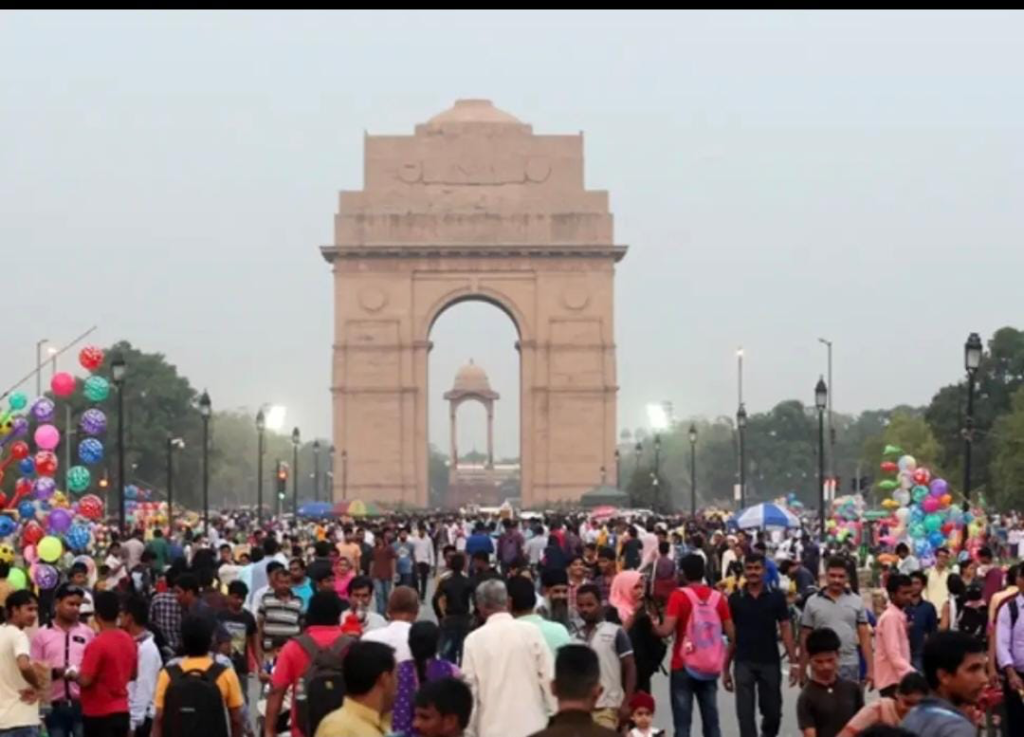
Delhi Records One of Its Cleanest Air Quality Days of the Year
Delhi witnessed a remarkable improvement in air quality on Tuesday as the city’s Air Quality Index (AQI) entered the “Good” category, offering residents a rare spell of clean and breathable air. According to air quality monitoring data, the AQI dropped to 29 during the early morning hours before gradually rising to 57 later in the day, both readings remaining within the “Good” category. The significant improvement came after continuous monsoon rainfall combined with favorable wind conditions that helped clear pollutants from the atmosphere.
The development has brought welcome relief to millions of Delhi residents who regularly face poor air quality throughout much of the year. Environmental experts have often pointed out that weather conditions play a crucial role in determining pollution levels in the national capital. Heavy rainfall naturally removes suspended particulate matter from the air, while stronger winds prevent pollutants from accumulating over the city. This combination creates ideal conditions for cleaner air, although such improvements are often temporary.
For Delhi, where air pollution has become one of the most pressing environmental and public health concerns, a “Good” AQI is a significant milestone. The city generally experiences satisfactory to moderate air quality during the monsoon months, but readings below 50 remain relatively uncommon. The latest improvement demonstrates the powerful influence of seasonal weather patterns on urban air quality and highlights the importance of favorable meteorological conditions in pollution management.
The primary reason behind this sudden improvement was the continuous spell of monsoon showers over Delhi and the surrounding National Capital Region (NCR). Rain acts as a natural cleansing mechanism by washing dust particles, smoke, pollen, and other airborne pollutants out of the atmosphere. This process, often referred to as “wet deposition,” significantly reduces the concentration of harmful particulate matter such as PM2.5 and PM10.
Along with rainfall, moderate wind speeds played an equally important role. Instead of allowing pollutants to remain trapped over the city, the winds dispersed them across a larger area, reducing their concentration in Delhi’s atmosphere. This prevented the formation of pollution hotspots and contributed to healthier air quality across the city. These weather-driven improvements are commonly observed during the monsoon season but are usually short-lived once rainfall subsides.
The improved air quality also encouraged many residents to spend more time outdoors. Parks, public spaces, and iconic locations witnessed increased footfall as people enjoyed clearer skies and fresher air. Health experts note that cleaner air temporarily reduces respiratory stress, particularly for children, senior citizens, and individuals suffering from asthma or other lung-related illnesses.
However, environmental scientists caution that weather alone cannot permanently solve Delhi’s pollution crisis. While monsoon rains offer temporary relief, long-term improvements require sustained policy measures aimed at reducing emissions from transportation, industries, construction activities, and waste burning. Vehicle emissions continue to remain one of the largest contributors to air pollution in Delhi, followed by road dust, industrial emissions, biomass burning, and seasonal crop residue burning in neighboring states during winter.
Government agencies and environmental authorities have implemented several initiatives over the past few years to reduce pollution levels. These include stricter emission norms, expansion of electric public transport, mechanized road cleaning, construction dust control measures, and continuous air quality monitoring. According to recent assessments, Delhi has shown gradual improvement in average air quality during the first half of 2026 compared with previous years, indicating that sustained pollution control efforts may also be contributing alongside favorable weather conditions.
Despite the encouraging improvement, experts warn against assuming that the city’s pollution problem has been permanently resolved. Delhi’s air quality typically deteriorates again after the monsoon season as rainfall decreases, temperatures fall, and atmospheric conditions begin trapping pollutants closer to the ground. During the winter months, additional factors such as stubble burning, increased vehicle emissions, festive firecrackers, and temperature inversion often push the AQI into the “Poor,” “Very Poor,” or even “Severe” categories.
The latest clean-air episode serves as an important reminder of how strongly environmental conditions influence air quality. It also reinforces the need for long-term urban planning, cleaner transportation systems, stricter industrial regulations, expanded green cover, and public participation in reducing pollution sources. Sustainable improvements can only be achieved through coordinated efforts involving governments, industries, scientists, and citizens working together.
Residents are encouraged to continue adopting environmentally responsible practices, including using public transport, minimizing vehicle emissions, avoiding open waste burning, conserving energy, and supporting initiatives that improve urban sustainability. Individual efforts, when combined with effective government policies, can contribute significantly to cleaner air over the long term.
The improvement in Delhi’s AQI is undoubtedly positive news for residents and environmental agencies alike. Although seasonal weather deserves much of the credit for the immediate improvement, the event also highlights the broader importance of maintaining strong pollution control measures throughout the year. Clean air is essential not only for public health but also for economic productivity, environmental sustainability, and overall quality of life.
As Delhi continues its fight against air pollution, the current spell of cleaner air offers hope that with the right combination of scientific planning, policy implementation, technological advancement, and public cooperation, the city can gradually move toward a healthier and more sustainable future.
Follow NewsNowNation.com for more updates regarding business and environmental news from across India and around the world.
