

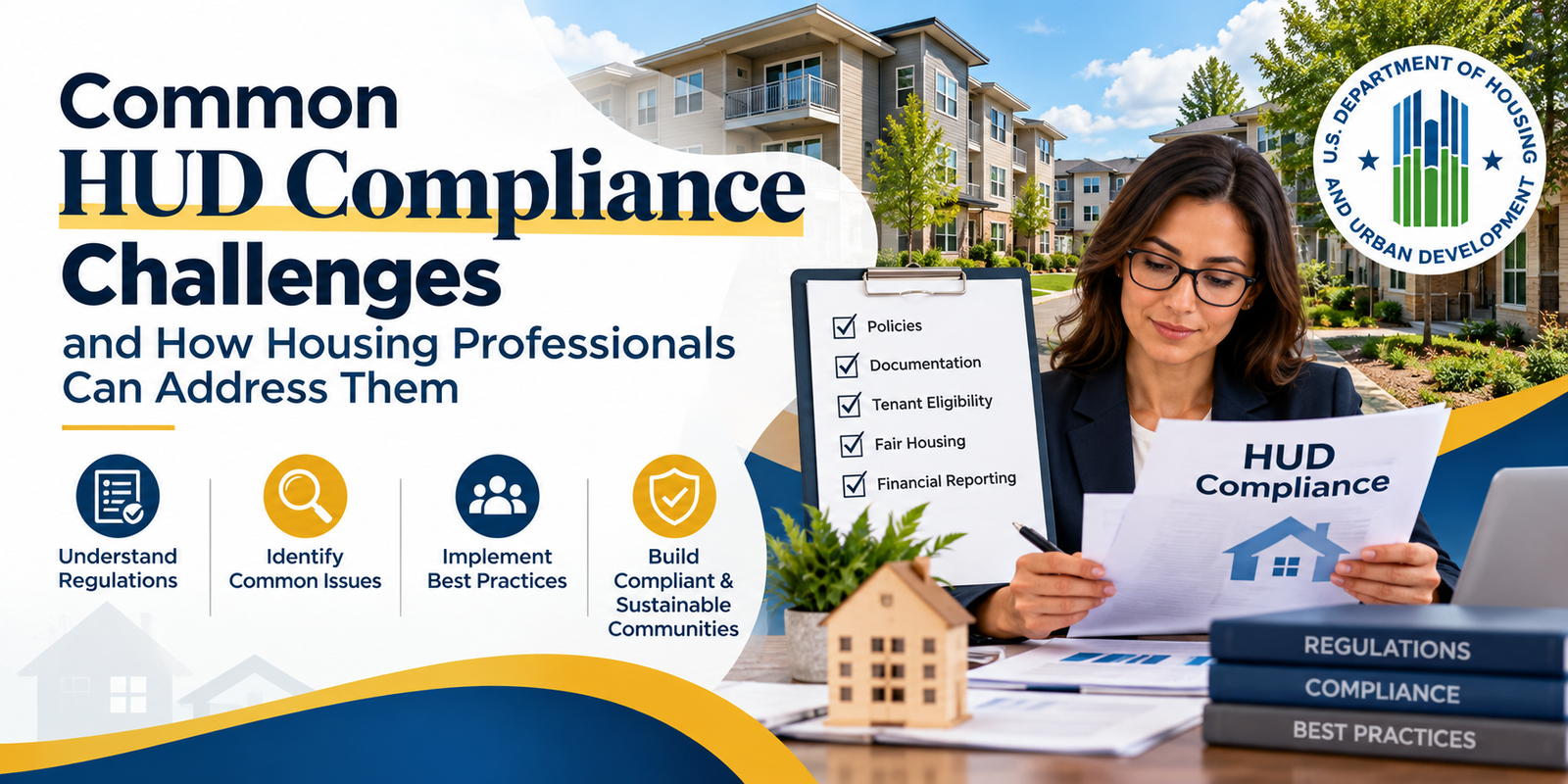
Managing affordable housing requires more than maintaining properties and assisting residents. Housing professionals must also follow applicable regulations, maintain accurate records, meet reporting deadlines, and ensure that housing programs operate fairly and consistently. For organizations working with programs supported by the U.S. Department of Housing and Urban Development (HUD), these responsibilities can become complicated when requirements change or administrative processes are not properly maintained.
Even experienced housing teams can face compliance challenges. Missing documents, incorrect income calculations, inconsistent tenant files, and inadequate staff training can create problems that affect daily operations and program performance. Understanding these challenges is the first step toward preventing avoidable errors and building more reliable housing management practices.
With the right procedures, ongoing education, and regular internal reviews, housing organizations can strengthen their compliance processes while continuing to provide quality services to residents.
What Is HUD Compliance?
HUD compliance refers to following the laws, regulations, program requirements, and administrative procedures applicable to housing programs administered or supported by HUD. The specific obligations depend on the program, funding source, property type, and the responsibilities of the housing organization.
For example, a public housing agency, a property owner participating in a rental assistance program, and an organization receiving federal community development funding may have different compliance responsibilities.
Common areas of concern include tenant eligibility, income verification, rent calculations, property inspections, fair housing, recordkeeping, reporting, and financial management. Housing professionals must understand which requirements apply to their particular program rather than relying on a single procedure for every property or resident.
1. Incomplete or Inaccurate Tenant Documentation
One of the most common HUD compliance challenges is maintaining complete and accurate tenant files. Housing programs may require documentation to establish household eligibility, verify income, record family composition, and support decisions related to rent or continued assistance.
Problems can occur when staff overlook required documents, use outdated information, fail to record follow-up actions, or store records inconsistently. These issues can make it difficult to demonstrate that decisions were made according to applicable program rules.
How housing professionals can address it:
Develop a standardized documentation checklist for each relevant program. Use consistent file-naming conventions, establish procedures for reviewing missing information, and assign responsibility for keeping records current.
Periodic file reviews can help identify gaps before they become more serious. Digital document management systems may also improve organization, provided access controls, privacy safeguards, and record-retention requirements are properly addressed.
2. Errors in Income Verification and Rent Calculations
Income verification can be particularly challenging when households have multiple income sources, irregular earnings, changes in employment, or other circumstances that affect eligibility and rent calculations.
Errors may occur when staff misunderstand which income sources must be considered, apply outdated guidance, use incorrect calculations, or fail to document how a determination was reached. Depending on the program, mistakes may result in incorrect rent amounts, inaccurate eligibility decisions, or the need to correct previous records.
How housing professionals can address it:
Staff should follow the income-verification and rent-calculation rules applicable to the specific housing program. Written procedures, approved calculation tools, documented reviews, and appropriate supervisory checks can reduce inconsistencies.
When a household reports a change in circumstances, staff should follow the relevant program’s procedures for reviewing and documenting that change. If a calculation is uncertain, consulting an appropriate compliance specialist or program administrator is preferable to relying on assumptions.
3. Keeping Up With Changing HUD Requirements
Housing regulations, program notices, administrative guidance, and reporting expectations can change. Housing professionals who rely on old manuals or informal advice may unintentionally continue using procedures that no longer reflect current requirements.
This challenge becomes more difficult for organizations that manage multiple properties or administer several housing programs simultaneously.
How housing professionals can address it:
Establish a process for monitoring official HUD publications and other applicable regulatory updates. Assign a responsible team member to review relevant changes and determine whether policies, forms, staff procedures, or training materials need to be updated.
Maintain a record of significant changes, the date they were reviewed, and any actions taken. Staff meetings and short refresher sessions can help communicate important updates without requiring employees to interpret every regulatory document independently.
Housing organizations should also distinguish between proposed changes, final rules, effective dates, and program-specific guidance before modifying their procedures.
4. Fair Housing and Consistent Treatment of Residents
Fair housing compliance is another important responsibility. Housing providers must understand the fair housing laws and other nondiscrimination requirements applicable to their activities.
Challenges can arise when employees apply eligibility criteria inconsistently, communicate requirements differently to different applicants, misunderstand reasonable accommodation responsibilities, or fail to document decisions appropriately.
Even when inconsistent treatment is unintentional, it can create complaints, undermine trust, and expose an organization to legal or administrative risks.
How housing professionals can address it:
Develop clear, written procedures for applications, eligibility decisions, resident communication, complaints, and reasonable accommodation requests. Train employees to apply the relevant rules consistently and to escalate sensitive cases to qualified personnel.
Housing organizations should maintain appropriate records of decisions and follow established complaint-handling procedures. Staff should never assume that a standard policy automatically resolves every accommodation request; individual circumstances may require a careful review under applicable law.
Regular reviews of policies and resident interactions can help identify inconsistencies and improve service delivery.
5. Property Inspections and Maintenance Requirements
Depending on the program, affordable housing properties may need to meet specific physical condition, inspection, health, and safety standards. Maintaining compliance can be challenging when properties have aging infrastructure, limited maintenance budgets, or unresolved repair requests.
Missed inspections, incomplete maintenance records, delayed repairs, and poor coordination between property managers and contractors can create operational difficulties.
How housing professionals can address it:
Use a structured inspection and maintenance schedule based on the property’s applicable requirements. Record inspection findings, assign corrective actions, establish reasonable completion targets, and verify that completed work addresses the identified problem.
A centralized maintenance log can help teams monitor outstanding issues and identify recurring problems. Housing providers should also maintain evidence of inspections, repairs, contractor work, and follow-up activities as required by the relevant program.
Proactive maintenance is generally easier to manage than responding to repeated emergencies, especially when budgets and staffing resources are limited.
6. Reporting Deadlines and Recordkeeping Problems
Affordable housing organizations may be responsible for submitting reports, maintaining financial records, documenting program activities, or providing information during monitoring and review processes. The exact requirements vary according to the funding arrangement and program.
Missed deadlines and inconsistent records often result from unclear responsibilities, manual processes, or inadequate communication between departments.
How housing professionals can address it:
Maintain a compliance calendar that identifies applicable reporting deadlines, responsible employees, required documentation, and internal review dates. Build in time for checking information before submission rather than treating the official deadline as the target for completing all work.
Where appropriate, use secure software to track submissions, preserve supporting records, and flag approaching deadlines. A designated reviewer should verify important reports and reconcile relevant figures with the underlying records.
Clear accountability helps ensure that reporting obligations remain part of routine operations instead of becoming last-minute tasks.
7. Insufficient Staff Training and Knowledge Gaps
Even well-designed policies can fail when employees do not understand how to apply them. New staff members may be unfamiliar with program terminology, while experienced employees may need updates when regulations or internal procedures change.
Training gaps can contribute to documentation errors, inconsistent tenant communication, incorrect calculations, and delays in completing administrative tasks.
How housing professionals can address it:
Create a training plan based on each employee’s responsibilities. Property managers, occupancy specialists, maintenance staff, and program administrators may need different levels of instruction.
Training can combine onboarding, practical case studies, refresher sessions, written procedures, and periodic knowledge checks. Organizations should also maintain appropriate records of training participation and evaluate whether employees can apply what they have learned.
Relevant HUD training and compliance education can help housing professionals strengthen their understanding of program administration and compliance responsibilities. The most suitable training depends on the employee’s role, the program involved, and the organization’s specific learning needs.
8. Preparing for Audits and Compliance Reviews
Audits, monitoring visits, and other reviews can place pressure on housing teams, particularly when records are scattered across different systems or previous findings have not been resolved.
A common mistake is to prepare only after a review has been announced. This approach can make it difficult to locate supporting documents, explain earlier decisions, or demonstrate that corrective actions were completed.
How housing professionals can address it:
Conduct periodic internal reviews of relevant files, financial records, policies, inspection reports, and required submissions. Use findings to identify recurring problems and assign corrective actions to specific individuals.
Maintain an organized record of prior findings, responses, supporting evidence, and completion dates. If an issue is identified, determine its underlying cause rather than correcting only the individual file where it appeared.
A consistent internal review process helps organizations identify weaknesses earlier and respond more effectively when formal monitoring takes place.
How E3 Housing Can Help Housing Professionals Strengthen Their Knowledge
HUD compliance involves a combination of program knowledge, careful documentation, sound administrative practices, and ongoing professional development. Housing organizations benefit when employees understand their responsibilities and have access to relevant educational resources.
E3 Housing offers housing-related training and educational resources intended to support professionals working in affordable housing and HUD-related environments. Its services may be relevant to housing administrators, property management teams, and organizations seeking to strengthen their knowledge of compliance procedures and program operations.
Professionals interested in affordable housing management training can explore relevant learning opportunities to help build stronger administrative practices and improve their understanding of housing management responsibilities.
Organizations should evaluate training options according to their staff’s experience, the programs they administer, and their specific compliance needs. Training can support better decision-making, but it should complement current official guidance, written organizational procedures, and advice from qualified compliance professionals where necessary.
Frequently Asked Questions
What are the most common HUD compliance challenges?
Common challenges include incomplete tenant documentation, income verification errors, incorrect rent calculations, changing regulatory requirements, fair housing concerns, maintenance issues, missed reporting deadlines, and insufficient staff training.
How can housing organizations reduce HUD compliance errors?
Organizations can reduce errors by establishing written procedures, conducting regular file reviews, training staff, monitoring official guidance, maintaining a compliance calendar, and documenting corrective actions.
How often should housing professionals receive compliance training?
Training frequency depends on program requirements, organizational policies, employee responsibilities, and changes in applicable guidance. Initial training, periodic refreshers, and additional instruction when important changes occur can help maintain staff knowledge.
Why is documentation important in HUD compliance?
Accurate documentation provides evidence supporting eligibility decisions, rent calculations, inspections, reporting, and other program activities. It also helps housing organizations respond to questions during monitoring, audits, and internal reviews.
Can training alone guarantee HUD compliance?
No. Training is one part of an effective compliance system. Housing organizations also need appropriate procedures, accurate records, management oversight, regular reviews, and access to current program guidance.
Conclusion
HUD compliance challenges can affect many aspects of affordable housing operations, from tenant eligibility and documentation to maintenance, reporting, and staff development. Although these responsibilities can be demanding, organizations can manage them more effectively by identifying risks early and building consistent procedures into their daily work.
Standardized documentation, careful verification, regular staff training, proactive maintenance, and periodic internal reviews provide a practical foundation for stronger compliance. Housing professionals should also monitor applicable official guidance and seek qualified advice when requirements are unclear.
With a structured approach and a commitment to continuous improvement, housing organizations can reduce avoidable administrative errors, support fair and consistent service, and maintain more reliable affordable housing operations.

