Unveiling the Enigmas: A Journey into the Heart of Black Holes
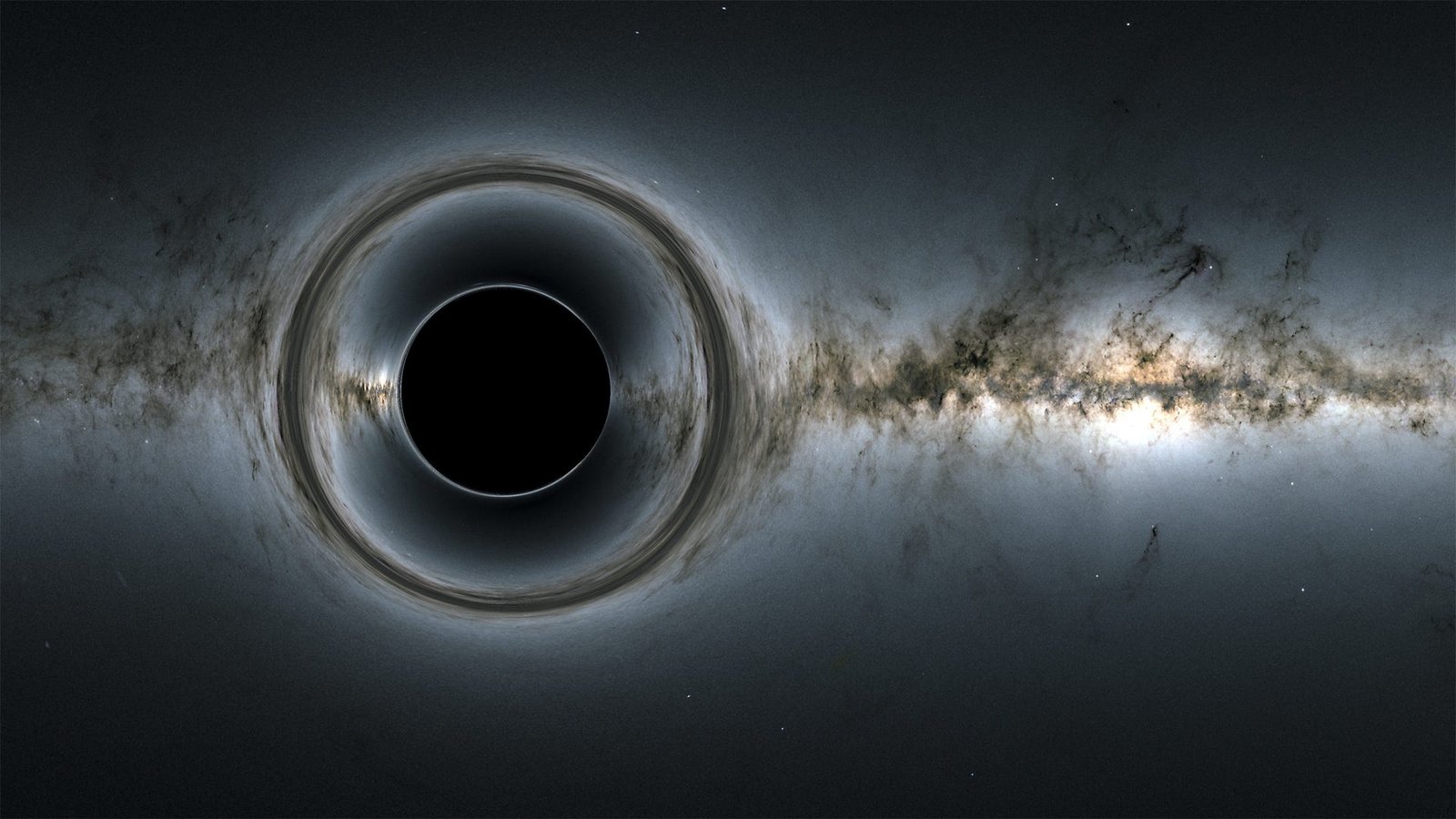
Black Holes are enigmas—sublime in their beauty, wonderful in their complexity, awe-inspiring to our irrational imaginations, and a frontier of physics that unites all we know of the magical science. They make us question whether that is enough. Spoilers: It is not. These giants are a positive well (pun intended!) of knowledge, and the deeper we go, the more we learn that there is much more yet to learn.
Born from Stardust: How Stars Perish and Black Holes Arise
In 1939, Einstein wrote of his belief that matter could not be compressed beyond a certain point. The poor man, he was woefully wrong in his old age. To talk about Black Holes, one must understand how stars work, and how they die.
Stars generate light from powerful nuclear processes in their core, called Nuclear Fusion. Nuclear Fusion releases extreme thermal pressure, enough to prevent the star from collapsing under its own gravity. In essence, stars are far too large. Large enough to have such immense gravity that they would collapse under their own weight, if not for the pressure from the heat generated in their core.
They are at a standoff, and both are balancing each other out, so to speak. This theory was proposed by John Wheeler, who is quite popular among Black Hole enthusiasts, as he should be! The man nearly single-handedly defended these much-hated stellar corpses, even coining the term ‘Black Hole’—a simple, yet efficient definition.
Once stars exhaust their nuclear fuel, the pressure is gone. The fearful realization sets in that the delicate balance is gone. Gravity starts pulling, very hard. Now, when stars die, they can form different things, depending on their size in life. This includes the much-underappreciated White Dwarfs. White Dwarfs are the remnants of star cores, which give out light not due to nuclear processes, but residual heat generated in life by the star.
However, Chandrasekhar determined that stars up to 1.4 times the size of our Sun form White Dwarfs—the infamous Chandrasekhar Limit. I call it infamous because it marked a boundary in our knowledge, and was quite a point of contention in those times. Small stars, including our Sun, become White Dwarfs. But these stars are very small in comparison to the giants that fill our majestic Universe. What about those larger than the limit?
Well, Robert Oppenheimer, Volkoff, and Snyder set out to answer just this question. And they found that spherically symmetric stars larger than the limit collapse under their own gravitational pull without the thermal pressure to form a point of infinite energy density. Simply put, the enormous star collapses to a single point. A single point which, quite literally, has infinite density! This point is known as a Singularity, and it is where our current understanding of Physics breaks down.
It seems the fears of the science community were justified. But we fit our understanding to the universe, not the other way around. According to Einstein’s extremely famous equation relating mass and energy, E = mc², energy is directly proportional to mass. This means that since Singularities have infinite density, they also have infinite energy density—a fine distinction that is useful for understanding Black Holes.
To help this make intuitive sense, imagine the possible ramifications of something that is millions of miles in diameter with a tremendous mass collapsing into a single point. Enter, Singularities and Black Holes!
Beyond the Brink: What Makes a Black Hole Tick?
To go any further, one must understand the distinction between Singularities and Black Holes and the nature of our universe. Minkowski suggested in 1908 that the ‘fabric’ of our Universe is Spacetime (misattributed to the legendary Einstein himself!). Spacetime consists of four dimensions (or coordinates)—our own three-dimensionally perceived reality, and time itself as the fourth one. Thus, even time is a coordinate. It can be different locally (i.e., in the vicinity of Spacetime). Simply put, time is relative.
This “fabric” can be curved by mass. Imagine a rubber sheet. This sheet is Spacetime. It can be bent into curved shapes if something is put on it, like a small ball. This small ball is the Earth. Earth bends it a decent amount. If we put an even larger ball in its place, the Sun, the sheet is bent by a very large amount. A tiny ball put near the Sun ball would fall towards it. This is gravity! Thus, gravity is not a force but a curvature of Spacetime by masses. Even WE curve Spacetime to near-zero amounts.
Gravitational (Spacetime) paths become (for Physicists!) simple geometry. To summarize this mildly difficult section: gravity is not a force, but a curvature of Spacetime. Everything curves it differently, but all objects with mass curve it. Falling towards it starts to make sense then, as most of the Spacetime paths lead directly towards the object bending Spacetime. The closer you are to the offending body, the more the gravitational force on you, but the lesser your Gravitational Potential Energy (GPE). GPE is the energy possessed by something with mass by its position in a bent section of Spacetime. It is the energy stored in you simply by your presence in a gravitational field. The farther away you are, the more ‘potential’ to be affected by the gravitational field you possess.
As for the distinction between Singularities and Black Holes, it is quite simple. As mentioned before, Singularities are points, while Black Holes are the entire region of Spacetime the Singularity affects. In our rubber sheet analogy terms, Singularities bend the sheet infinitely (sort of like a well with no bottom) while the Black Hole is the entire part of the sheet curved towards the well (like a mountain sloping towards this well). This curvature is extreme. Falling in would be like descending 500 feet of altitude in a second. It is not literal height, but rather, the difference in gravitational strength between the top and the bottom of these “500 feet” is immense. In essence, they lose a lot of GPE simply by moving a small distance.
The Event Horizon and Beyond: Unravelling Black Hole Properties
Interest in Black Holes was largely forgotten during World War 2, after which Physicists were focused mostly on the Quantum world. Until, one fine day, Quasars were discovered. Quasars (which stands for Quasi-Stellar Radio Source) are the brightest objects in the Universe, found orbiting around Supermassive Black Holes, which are Black Holes found at the centre of each Galaxy. How they form was of supreme interest, notwithstanding the Quasars’ whole “brighter than entire galaxies” description. They were mostly formed of dust particles, but the layers of dust clouds are pulled in by an incredible gravitational force. This causes large amounts of friction between the large clouds of particles, which generates a corresponding amount of heat and light, giving Quasars their brightness.
There is a certain border around a Black Hole beyond which escape from it is still possible. This is the Event Horizon, popularly known as the “point of no return”. Beyond it, some Spacetime paths can still “lead” away from the Singularity, should enough energy be supplied. However, once it is crossed, an infinite amount of energy would be required to escape the infinitely curved Spacetime near the Singularity (which nothing could possibly have). Someone falling in would not even realize they have crossed it until it was too late. The escape velocity outside is less than lightspeed, at the Horizon it is lightspeed, and inside it is more than lightspeed. Since nothing can travel faster than light, it is virtually impossible to escape a Black Hole once the Event Horizon is crossed.
The most popularly known, and yet perhaps the least intriguing out of the remarkable set of properties Black Holes have, is their ability to cause “Spaghettification” to whatever falls into them. It is like falling off the edge of a waterfall, except the difference in gravitational force between the various points while falling is not negligible—it is enormous. As shown by my mountain altitude analogy, it would be like your head is at 500 feet while your toes are at 300 (in terms of gravitational gradient between points of the body). Your sides would be compressed as you are stretched out to extremely painful levels. These forces causing this are known as Tidal forces, and they vary between Black Hole sizes. Stellar Mass (small Black Holes) have extremely steep gravitational gradients, which means Tidal forces are lethal before one even crosses the Event Horizon. While Supermassive Black Holes do not have as steep gradients, so one can expect a much more drawn-out and painful death, since you would die much later after crossing the Event Horizon.
Now, one must necessarily wonder, what does one see watching one’s (hopefully) worst enemy fall into a Black Hole? Once they cross the Event Horizon, it is evident that one would not see anything. But before it? We would see them shift, of sorts. They appear redder and redder, until finally, the last image of them screaming is what remains stuck. Why? This is due to Gravitational Redshift. See, light has frequency, which determines how much energy it has (frequency is the number of oscillations of a wave per second). This frequency has an inverse relationship with its wavelength, which is the distance between a crest and a trough of a light wave.
As light escapes from the region before the Event Horizon, it loses this frequency as it is stretched out, leading to loss of energy during escape. This increases wavelength, which shifts its perceived colour. (The equation E = hf, which determines its energy based on frequency, shows how its energy is lost with frequency.)
Black Holes bend light because of Spacetime geometry. Since in the local Spacetime frame, all paths lead to the Singularity, light travels in the straightest path it sees, which is curved from the perspective of a flat plane. To clarify: light travels the straightest path it sees. Since all Spacetime paths lead to the Singularity, they quite literally trap the future itself. The time vector points the same way as the space one. Thus, since Gravity isn’t a force, it can affect massless photons. F = ma loses importance in relativity. Classical views give way.
Black Holes only preserve three things from everything they swallow and from the star they are made of. This is the so-called “No Hair Theorem.” These three things are Angular Momentum, Charge, and Mass. These are the only things that represent the “identity” (in a manner of speaking) of a Black Hole.
The Entropy Puzzle: Black Holes and Disorder
Physicists had a big problem. Black Holes violated the Second Law of Thermodynamics, which states that the Entropy of a system either stays the same or tends to increase. Entropy is a measure of the disorder of a system. To visualize, imagine a box full of particles. They could be in any arrangement, even all grouped up together in a corner, which is the state of least disorder. But this can almost never happen, because they always tend to remain or even increase their random states and in disorder, which is what entropy measures. By eating all that mass, Black Holes were decreasing entropy. An impossibility! One that confused physicists well into the near modern times.
Finally, Bekenstein had an idea. Black Holes must have entropy. So, what effect does all that mass have on it? Then it hit him. The area of the Event Horizon must be directly proportional to the mass of the Black Holes. The more the mass, the more the area. The entropy of a Black Hole is finite, originating from a large but measurable number of states. This entropy was the ‘hidden’ information inside the Black Hole, which increased when more matter was ‘eaten’. It was now possible to measure the Entropy of a Black Hole. The community sighed in relief. One more law that Black Holes seemingly broke was fixed. Only a million more to go!
This was not such an easy idea to prove. Around this time however, Stephen Hawking arrived on the scene. Quite possibly one of the most famous scientists of modern times, he proved that Black Holes have temperature by his very famous Hawking Radiation (which will be explained later in this article). Temperature is a result of entropy. Or rather, an indication that something has it, which allowed him to mathematically formalize the Bekenstein-Hawking Entropy. Case closed!
Spinning Singularities: The Wild World of Kerr Black Holes
All the properties discussed above are inherent to all Black Holes. However, we must consider rotating Black Holes, or Kerr Black Holes. After all, they make up most of the Black Holes in the Universe. The non-rotating ones, or Schwarzschild Black Holes, are very rare. Kerr Black Holes form when a star rotates in life. These rotations are usually very infrequent, as it can take a whole month to complete a rotation of their own axis. But when the star collapses, per the No Hair Theorem, angular momentum must be preserved (Angular momentum is the amount of motion something has due to its rotating motion). So, they start spinning as Black Holes. And the spinning is extreme, as in ‘nearly the speed of light’ extreme. But why?
If they spun so slow as a star, why so fast as a Black Hole? Well, it is because, as a star, their radius was huge. As any student of physics knows, momentum is always conserved, and angular momentum is directly proportional to mass, radius squared and velocity. As the radius decreases, velocity must increase. The more extreme the radius change, the faster the velocity. So, when Black Holes are formed, the mass remains constant, but the radius of the Singularity is a millionth or billionth of what it was before. Thus, the Black Hole spins really fast.
Black Holes have immense mass, which curves Spacetime. But when they also spin so fast combined with their mass, something weird happens. They don’t just bend Spacetime, they drag it along with them as they rotate! This is known as Frame Dragging, and it’s one of the weirdest things about Kerr Black Holes. They are literally dragging the fabric or frame of the universe along with them at near lightspeed. At the Ergosphere, the region outside the event horizon where this rotation can be seen, anything falling in appears to someone far away (ignoring gravitational redshift) as traveling faster than light! Why? Because while locally, the thing falling away is traveling at a small speed, it is traveling with the Spacetime, that acts as a kind of conveyor belt. Which means that while nothing travels faster than light, the combination of the fast spinning of Spacetime along with the object moving at its own speed appears faster than light. To clarify, nothing locally exceeds lightspeed, because relative to the much-harassed spacetime near a Kerr, your speed is perfectly plausible. It is a relative view. No physics laws are broken (just once, thank goodness!). It is just that to an outside observer at a very far distance (called being at infinity), you appear faster than light, appear being the keyword here.
Kerr Black Holes are also unique in their structure, unlike Schwarzschild Black Holes that can only boast the basics. Their singularity is called a ‘ring singularity’, since due to the immense angular velocity, their singularity gets flattened out into a ring shape. It is one dimensional, and infinitesimally thin. They also have not one, but two event horizons! The outer one behaves much like the singular horizon in a Schwarzschild. The inner one, however, is a point of contention, and of immense debate and research. It surrounds the Ring Singularity, and its properties are highly complex and subject to theoretical debate (and hence, outside the scope of my humble article!). And lastly, the Ergosphere. It is not a ‘point of no return’ since some Spacetime paths still lead out. However, an immense amount of energy is required to escape the rotations described before, along with the gravitational force. It is double the trouble! Anything caught in it must rotate the same direction as the Black Hole, or use a large amount of energy to travel an inch the other way. It is impossible to remain stationary relative to an outside observer.
Kerr Black Holes are the frontier of Black Hole research. They also number a large amount out of the estimated 1 quintillion Black Holes in the observable universe. But let’s not forget to pay our respects to the less confusing original, the Schwarzschild.
The Vacuum Paradox: Understanding Hawking Radiation
Finally, we come to the golden child of Black Hole knowledge, made so general that its simplified explanation propagated by Hawking himself borders on being a complete misconception. Hawking must have presumed that the public lacked the intelligence to comprehend it easily. Which, to be fair, as a member of the public, we do. I struggled with this for a few hours before a lightbulb went off.
To understand the root cause for Hawking Radiation, we must understand Quantum Field Theory—just a bit. Imagine an empty box (a tired analogy, I know; physicists love to use boxes in everything, even the gruesome deaths of cats!), and it is really empty. As in, no particles inside it, a true vacuum. Now imagine a set of points everywhere distributed throughout it. These points are the representations of locations in the Quantum Field. They are quantum because of their probabilistic nature. Each point is assigned a certain “energy fluctuation” which usually hangs around zero. (This is a simplification; the entire field fluctuates, not just points representing parts of it.) Simply put, each point has a certain range of energy values—these values being a range and not zero because of Heisenberg’s Uncertainty Principle at such small scales.
A “particle” as we define it is what happens when some of these energy values do not hang around zero (when energy is supplied to it). But quantum fluctuations are always happening, and always ranging from zero to near zero. This does not violate Conservation of Energy, because it is probabilistic, and these are called “virtual” particles for the same reason. Now, this shows that the definition of what a particle is, is relative.
Now, to smoothly transition to Hawking Radiation, it is time to delve into the Unruh Effect. Stated simply, it is: “An observer accelerating in a vacuum observes a thermal bath in it, while an inertial observer sees only the vacuum.”
This definition raises the obvious question all physics strives to answer in all its branches: Why? How can it be that by accelerating in a vacuum, one sees a thermal bath? Well, it is based on the quantum field. Imagine both observers have atom-sized detectors. To the inertial observer, who is either at rest or at constant speed, they only detect standard quantum fluctuations, none of which qualify as particles in the inertial reference frame. However, for the accelerating observer, the different energy modes of the quantum field mix together as they get stretched out, and their detector—simply by the work being done to keep accelerating—detects a thermal bath, by sorts of “coupling” with the field. Or it can be thought of as resonating with the field.
In essence, the very act of accelerating causes the observer to couple with the field, and detect standard deviations mixed together as real particles. This doesn’t violate energy conservation; the work being done to accelerate is what makes these particles detectable. Both viewpoints are valid, and it can be both a vacuum and a thermal bath. This implies that even the perception of a vacuum depends on movement or position in Spacetime, which is called Rindler Spacetime in these accelerating situations.
To summarize the unruly Unruh Effect: the act of accelerating provides energy to the detector, which allows it to resonate with the quantum field and “create” the particles it is attempting to detect. These are standard quantum fluctuations which, due to the mixing of energy modes in Rindler Spacetime, are detected as real particles (basically, energy levels get mixed, making the quantum field full of particles, which are not real particles from an inertial perspective, but are real from an accelerated one). Energy is still conserved, as the work done in accelerating is the energy that we can think of as being “lost” to allow detection of standard fluctuations as particles. All viewpoints are correct, and what we define as a vacuum is wildly different from other viewpoints. Relativity taken to its limit—Einstein is made the saviour of Physics!
It is important to keep these points in mind as we venture into Hawking Radiation, and all the complicated, mind-bending physics associated with it.
The Black Hole’s Whisper: Demystifying Hawking Radiation
The Unruh Effect proves that vacuum is a relative definition. Hawking Radiation relies on many of the same concepts and explanations. We’ve all heard the version spread by good old Hawking, which I’ll state here to start with confusion and end with reality-questioning chaos (as all quests for truth should):
“Particle and antiparticle pairs are popping into existence all the time, but they collide and annihilate each other. When they are formed on the event horizon of a Black Hole, the antiparticle, which has negative energy, falls into the Black Hole and steals energy from it, while the particle escapes using this energy, which slowly decreases the Black Hole’s mass over time, until they die with a violent explosion.”
Now, many questions pop up. What is negative energy? How does the particle always escape and not the antiparticle? Let’s take this apart.
Black Holes bend Spacetime. This bending also curves and stretches the quantum field, which permeates all of Spacetime (and can even be called a part of it). Something similar to the Unruh Effect occurs here: energy modes get mixed as the field stretches out. This makes the area around a Black Hole effectively Rindler Spacetime. To someone falling in, the field looks like a vacuum with standard deviations. But to an observer at infinity, they detect weak light waves, with wavelengths almost as large as the Black Hole itself, seeming to leak away. Both viewpoints are correct—just reversed compared to Unruh.
The mixing of energy modes by Spacetime curvature causes fluctuations with enough energy to emit these faint light waves. For the infalling observer, this is still “just vacuum.” For the distant observer, it’s real radiation. The difference arises from gravitational potential energy (GPE): the distant observer is at flat spacetime, while the infaller is in changing curvature.
Once again, energy conservation is not violated. The weak light is produced by the extreme curvature itself—so the energy comes directly from the Black Hole’s mass. As mass and energy are proportional, the Black Hole slowly loses mass. Over incomprehensible spans of time (a supermassive Black Hole may take googol years—10^100!—to evaporate), this loss leads to a final, brilliant explosion. Hawking himself hinted at this in his paper “Black Hole Explosions?”.
But now, let’s clear up Hawking’s oversimplification. There is no literal antiparticle falling in. Locally, all that exists is a faint light wave. The “antiparticle with negative energy” is a bookkeeping device useful for the reference frame of the distant observer. It’s real in their equations but not in the infaller’s experience—much like how centrifugal force is “fake” but useful in rotating frames. The negative energy simply accounts for the mass-energy lost by the Black Hole, captured mathematically by Bogoliubov transformations (or “BoogleBoogle transformations,” as I prefer, since I don’t know Russian).
The lesson? Everything is relative. Both particles and antiparticles “exist,” but which viewpoint sees what depends on the reference frame. An infalling observer would never detect Hawking Radiation. From their perspective, the Black Hole does not lose mass. They see only a mountaintop and mistake it for a bump in the ground. Hawking Radiation is a global effect of curved spacetime, not a local one.
The Infinite Well: A Journey Concludes, But Knowledge Endures
The mysterious and complex world of Black Holes is, to reiterate, a well of knowledge. Hopefully, this article has illuminated a bit of it. But compared to what remains, it is only a faint Hawking Radiation of illumination.
Each why answered becomes a how for another why, and the cycle of discovery continues. It is impossible to capture it all here, but further research may one day allow us to uncover more—whether in the study of gravitational waves from colliding Black Holes or in the pursuit of a unified theory.
The well is infinite. Our journey only deepens.
-BY Ahaan Mathur
St. Joseph’s Academy.