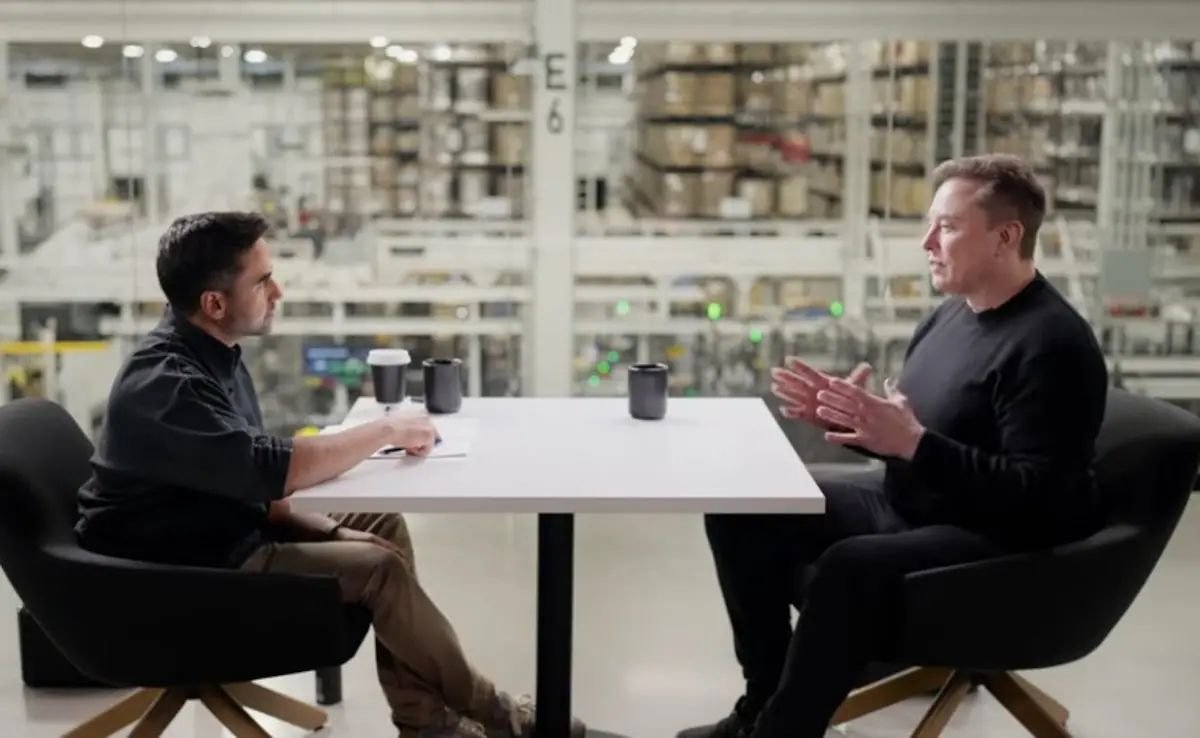
Elon Musk’s long-awaited conversation with Zerodha co-founder Nikhil Kamath has quickly become one of the most discussed podcast moments of the year. The episode moves far beyond a celebrity interview, touching on technology, geopolitics, India’s growing influence, the future of work and Musk’s own worldview shaped by personal experiences.
This explainer breaks down every major theme of the Musk–Kamath discussion and why it matters for India and the global economy.
India, Talent and the H-1B Debate
Musk began by acknowledging what he called America’s “immense benefit” from Indian talent. With Indian engineers playing a central role in Silicon Valley, he described India as one of the most significant contributors to American innovation.
However, he also criticised the misuse of the H-1B visa programme by certain outsourcing companies that “gamed the system.” Musk argued that while the programme requires reforms, shutting it down would hurt the US far more than it would help. His position blends support for high-skill immigration with a warning against systemic loopholes.
AI and a Future Where Work Becomes Optional
One of Musk’s strongest claims was that within the next two decades, artificial intelligence and robotics will make most forms of work “optional.” As automation accelerates, he predicts a world where production, services and efficiency are handled by machines, and human beings work out of interest rather than necessity.
He cautioned that this new era demands shared benefits, ethical standards and global cooperation. Without guardrails, AI could deepen inequality or concentrate power. With responsible governance, it could create an age of abundance.
Advice to Young Entrepreneurs
In a segment that resonated strongly with India’s startup community, Musk advised young founders to “be net contributors to society.” His emphasis was on creating real value instead of chasing valuations or quick wins.
He pointed towards sectors like energy, education, infrastructure, robotics and AI as areas where long-term impact intersects with commercial potential. Kamath and Musk also discussed the importance of first-principles thinking — questioning assumptions and building from fundamentals rather than imitation.
Trade, Tariffs and India’s Place in the Global Economy
Musk revealed that he was opposed to former US President Donald Trump’s tariff moves against India, arguing that free trade drives innovation and better products. Tariffs, he suggested, slow progress, hold back competition and harm consumers.
While Tesla did not dominate this conversation, Musk reiterated his interest in expanding Starlink in India, calling affordable connectivity essential for digital and economic inclusion.
Personal Reflections and Musk’s India Connection
In a humanising moment, Musk spoke about his partner Shivon Zilis being half-Indian, and one of their children having the middle name “Sekhar” in honour of Nobel Prize–winning physicist Subrahmanyan Chandrasekhar.
The discussion also touched on declining global fertility rates — a topic Musk often stresses. When Kamath mentioned he has no children, Musk responded, “Maybe you should,” combining humour with his long-standing concerns about demographic decline and its impact on future civilisation.
The Obsession with “X” and the Future of Information
Musk discussed his recurring fascination with the letter “X,” which appears across his ventures from SpaceX to X (formerly Twitter), xAI and his early startup X.com. He reiterated his ambition for X to become the most accurate public information platform in the world — driven by transparency, community-based fact-checking and open debate.
Rethinking Education and Human Potential
Linking AI with the future of learning, Musk argued that education systems need to shift from memorisation to problem-solving. Students should be trained to question, analyse and build. According to Musk, the combination of digital learning tools and real-world problem-solving will define the next generation of innovators.
Wealth, Happiness and the Meaning of Work
Kamath steered part of the conversation toward purpose and how wealth intersects with fulfilment. Musk’s perspective was clear: money is a by-product of solving meaningful problems. Focusing on impact, he said, is far more sustainable — personally and economically — than pursuing wealth for its own sake.
Why This Conversation Matters
This Musk–Kamath dialogue arrives at a time when India is emerging as a global talent powerhouse, AI is transforming productivity, and debates around immigration, trade and online information are reshaping geopolitics.
For Indian entrepreneurs, students, policymakers and technology professionals, the conversation offers insights into how the next decade of innovation and global competition will unfold — and how India can position itself at the centre of this transformation.
NewsNowNation Explainer

