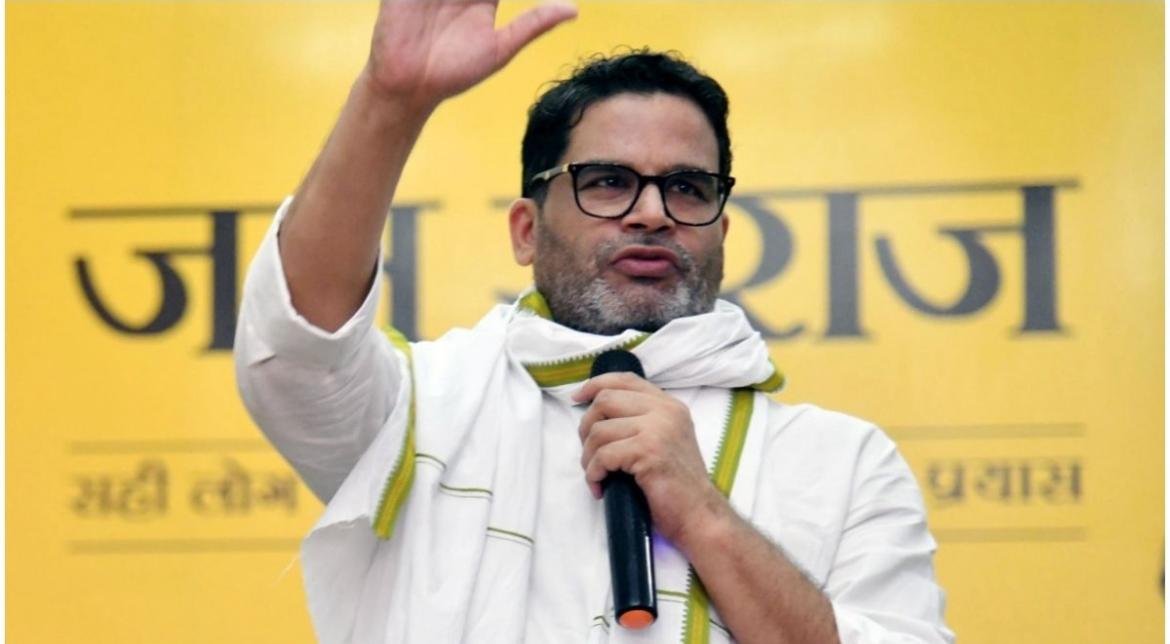
Prashant Kishor, popularly known as PK, is one of the most fascinating figures in contemporary Indian politics. From shaping some of the biggest electoral victories in the last decade to launching his own political movement in Bihar, his journey reflects the evolution of Indian democracy itself—where strategy, grassroots connection, and governance reform now walk hand in hand.
Early Years and Public Health Career
Born in Sasaram, Bihar, and raised partly in Buxar, Prashant Kishor initially pursued a career far removed from electoral politics. A trained public health professional, he worked with United Nations agencies for nearly a decade, focusing on health programs across Africa and India. This grounding in development and governance gave him first-hand exposure to policy implementation, which later influenced his emphasis on issue-based politics.
Entry into Politics and Rise as a Master Strategist
Kishor’s political career began in 2011 when he joined the Gujarat government’s initiative and became closely associated with Narendra Modi’s re-election campaign. His team, Citizens for Accountable Governance (CAG), became instrumental in BJP’s historic 2014 Lok Sabha victory, revolutionizing the way data, technology, and social media were used in Indian elections.
What set Kishor apart was his ability to combine micro-level booth management with large-scale narrative building. Over the next decade, he worked across party lines—helping Nitish Kumar’s JD(U)-RJD-Congress alliance sweep Bihar in 2015, assisting Amarinder Singh in Punjab (2017), strategizing for Y.S. Jagan Mohan Reddy in Andhra Pradesh (2019), supporting Arvind Kejriwal’s AAP in Delhi, and even playing a crucial role in Mamata Banerjee’s emphatic victory in West Bengal (2021).
His reputation as the “Chanakya of Indian Politics” grew, but in May 2021 Kishor announced that he was retiring from election management, saying he no longer wished to remain a “backroom boy.”
The Shift: From Strategy to Jan Suraaj
Rather than continuing as a consultant, Kishor turned to direct politics in his home state. In May 2022, he launched the Jan Suraaj Padyatra, a 3,000-km march across Bihar, covering over 5,000 villages. Unlike traditional political campaigns, Kishor’s padyatra was not about asking for votes, but about listening to citizens. It touched upon key issues of unemployment, migration, corruption, lack of education opportunities, and poor healthcare facilities.
On 2 October 2024, this movement formally became the Jan Suraaj Party (JSP). The party claimed a massive one crore membership within months, signalling a hunger among the public for an alternative beyond the entrenched NDA and RJD camps. The JSP also announced a 150-member state core committee and appointed senior leaders like former BJP MP Uday Singh as national president.
Bihar 2025: A Direct Contest
Kishor has declared that Jan Suraaj will contest all 243 seats in the upcoming 2025 Bihar Assembly elections. Through the “Bihar Badlao Yatra,” starting from JP Narayan’s birthplace Sitab Diara, he pledged to visit every constituency in 120 days, holding two rallies each day.
Unlike traditional caste-driven politics in Bihar, Kishor positions JSP as an issue-based, development-first party. He has openly stated that the next election will be a direct battle between Jan Suraaj and the NDA, with the RJD slipping into irrelevance.
Challenges, Controversies, and Public Activism
Kishor has not hesitated to challenge established leaders. He has accused Prime Minister Narendra Modi and Rahul Gandhi of indulging in blame politics, while directly naming Lalu Prasad Yadav and Tejashwi Yadav in corruption debates.
In early 2025, Kishor launched a fast-unto-death protest against alleged irregularities in Bihar Public Service Commission (BPSC) examinations, aligning himself with students’ rights movements. His activism reinforced his image as someone who engages beyond electoral math.
Recently, he suffered a rib injury during a roadshow in Arrah but quickly resumed his campaign, underlining his commitment to the political battle ahead.
What the Future Holds
For Prashant Kishor, the 2025 Bihar elections are not just another campaign—they are the true test of whether his years of strategy can translate into electoral and governance success on the ground. If JSP performs strongly, it could reshape Bihar’s political landscape and even offer a new national model of politics focused on transparency and accountability.
His journey from a UN health expert to the mastermind of India’s most successful election campaigns, and now as the face of a new political party, represents the evolution of a man unwilling to remain in the shadows. For Indian voters, PK symbolizes both hope and disruption—an attempt to replace rhetoric with results.
Conclusion
Prashant Kishor’s life journey shows that politics in India is no longer just about caste, dynasty, or charisma—it can also be about data, governance, and grassroots connection. As Bihar heads into a crucial election year, Kishor’s experiment with Jan Suraaj will test whether issue-based politics can truly capture the imagination of voters. His success—or failure—will have lessons not just for Bihar, but for Indian democracy as a whole.
-By NewsNowNation Editorial Team

