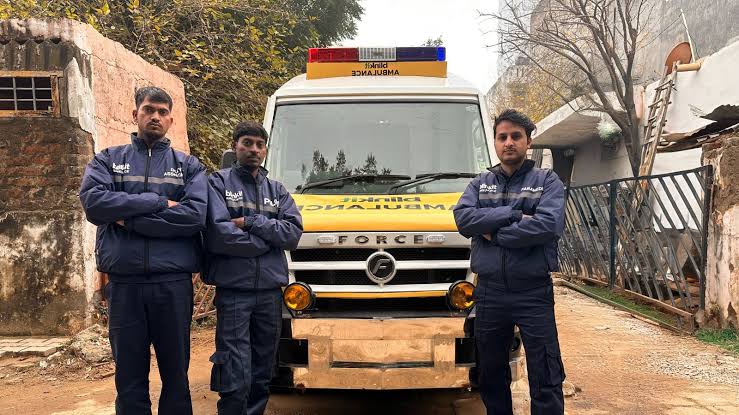
In a recent LinkedIn post, Gurugram resident Komal Kataria shared a compelling account of how Blinkit’s rapid-response ambulance service played a crucial role during her grandfather’s medical emergency. Her narrative sheds light on the evolving landscape of emergency medical services in India, highlighting the impact of quick commerce platforms extending their services beyond traditional boundaries.
A Swift Response in Critical Times
Komal detailed the urgency of her grandfather’s condition, emphasizing the critical nature of timely medical intervention. Anticipating the usual delays associated with emergency services, she opted for Blinkit’s newly introduced 10-minute ambulance service. To her astonishment, the ambulance arrived within minutes, a response time that exceeded her expectations and underscored the potential of integrating quick commerce logistics into healthcare.
Professionalism and Compassion in Action
Upon arrival, the paramedics conducted immediate assessments, including checks of blood pressure, blood sugar, and oxygen levels. This proactive approach ensured that her grandfather received essential care even before reaching the hospital. Komal was particularly moved by the team’s dedication; they remained with the family until the attending physician arrived, providing a comprehensive handover of the patient’s condition. Such continuity of care is vital in emergency scenarios, where every detail can influence patient outcomes.
Integrity Beyond Duty
An incident that stood out to Komal was when her mother attempted to offer the paramedics a gratuity out of gratitude. The team graciously declined, reflecting a commitment to ethical standards and reinforcing trust in the service. This act of integrity not only highlights the professionalism of the medical team but also sets a benchmark for service providers in the healthcare sector.
Redefining Emergency Response
Komal’s experience led her to reflect on the broader implications of Blinkit’s service. She remarked that the company is not just revolutionizing quick commerce but is also redefining emergency response in India. By leveraging their logistical expertise, platforms like Blinkit are bridging gaps in critical services, offering faster and more reliable options for those in need. This integration signifies a shift towards more responsive and patient-centric healthcare solutions.
Corporate Acknowledgment
The impact of Komal’s testimonial reached corporate corridors, prompting a response from Deepinder Goyal, CEO of Zomato, Blinkit’s parent company. Expressing his gratitude, Goyal stated, “I am so glad we were able to help. Wishing your grandfather a speedy recovery.” Such interactions between users and corporate leaders highlight the importance of customer feedback in shaping and validating service offerings.
The Genesis of Blinkit’s Ambulance Service
Launched in early 2025, Blinkit’s 10-minute ambulance service emerged from a vision to extend the company’s rapid delivery model to essential services. Recognizing the critical need for timely medical assistance, especially in urban areas plagued by traffic congestion, Blinkit aimed to provide a solution that could potentially save lives. Equipped with state-of-the-art medical equipment and staffed by trained paramedics, the service was designed to offer immediate care during the crucial pre-hospital phase.
Community Reception and Impact
Since its inception, the ambulance service has garnered positive feedback from the community. Medical professionals have also acknowledged its potential. An AIIMS neurosurgeon recently referred to the initiative as the “healthcare revolution India had been waiting for,” following a successful patient transfer facilitated by Blinkit’s service. Such endorsements from the medical fraternity underscore the service’s efficacy and its alignment with broader healthcare objectives.
Challenges and Future Prospects
While the initial response to Blinkit’s ambulance service has been overwhelmingly positive, scaling such a model presents challenges. Ensuring consistent response times across diverse urban landscapes, maintaining high standards of medical care, and integrating with existing emergency infrastructures require strategic planning and collaboration with healthcare authorities. However, Blinkit’s initiative sets a precedent, encouraging other quick commerce platforms to explore avenues where their logistical capabilities can meet societal needs.
Komal Kataria’s account is more than just a personal testimonial; it reflects a transformative period in India’s emergency medical services. The fusion of quick commerce logistics with healthcare delivery exemplifies innovation aimed at societal benefit. As platforms like Blinkit continue to explore and expand such services, the future of emergency response in India looks poised for significant advancements, promising timely and efficient care for those in need.

