Trump Backs the New Defence Agreement
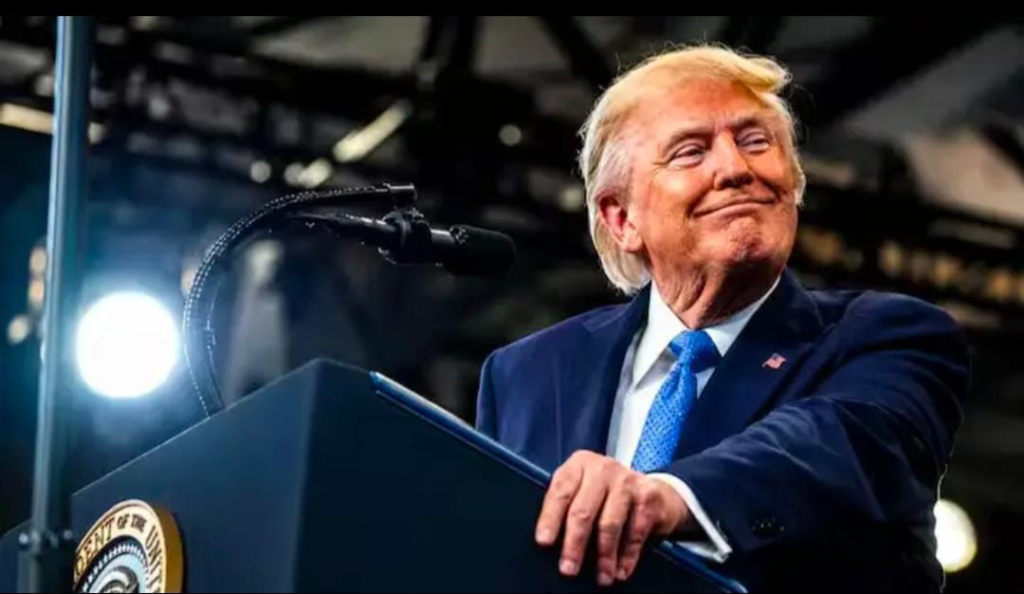
US President Donald Trump has welcomed the newly signed defence agreement between Saudi Arabia, Turkey and Pakistan, describing the development as a “big, bold and important first step” towards stronger regional security. Trump’s comments have drawn fresh international attention to the Mecca Joint Defence Agreement and its possible impact on the strategic balance in the Middle East and South Asia.
The three countries signed the Mecca Joint Defence Agreement on August 7, 2026. The agreement establishes a framework for closer defence and military cooperation, including a mutual defence commitment under which an armed attack against one of the participating countries would be regarded as an attack against all three. The arrangement has attracted comparisons with NATO’s collective defence principle. (The News Pakistan)
Trump expressed his support for the agreement in a post on his Truth Social platform. He said he was pleased to see Saudi Arabia, Turkey and Pakistan finally sign the pact, arguing that it showed countries in the region were coming together and would be able to strengthen their ability to defend themselves.
His endorsement is significant because the United States maintains longstanding strategic, economic and security relationships with all three countries, although their individual relationships with Washington have developed in different ways. Trump’s response also comes at a time when security concerns across the Middle East have intensified and regional governments are reassessing their defence arrangements.
What Is the Mecca Joint Defence Agreement?
The Mecca Joint Defence Agreement brings Saudi Arabia, Turkey and Pakistan into a new trilateral security framework. The agreement was signed in Makkah by Saudi Crown Prince and Prime Minister Mohammed bin Salman, Turkish President Recep Tayyip Erdogan and Pakistan Prime Minister Shehbaz Sharif.
At its core, the agreement establishes the principle that an armed attack against any one of the three signatories will be treated as an attack against all. This collective defence provision is one of the most important aspects of the agreement and has led to comparisons with NATO’s Article 5 mechanism. (Saudi Gazette)
However, the pact is not limited to a political declaration. Turkey’s defence ministry has said that the agreement is intended to place defence relations between the three countries on a more institutional and sustainable footing. It includes plans for high-level political and military coordination involving defence ministers, foreign ministers and senior military commanders.
The agreement also provides scope for joint military exercises involving land, naval and air forces. Cooperation is expected to extend to air defence, unmanned systems, electronic warfare and artificial intelligence-related military capabilities. The three countries are also expected to explore deeper cooperation in defence industries, including joint development, production, technology cooperation and logistics support. (Reuters)
Why Saudi Arabia, Turkey and Pakistan Joined Forces
The defence pact comes against the backdrop of significant instability across the Middle East. Saudi Arabia has faced increasing security challenges and has been seeking stronger defensive arrangements while attempting to avoid becoming directly involved in wider regional conflicts.
For Riyadh, closer military cooperation with Turkey and Pakistan provides access to two countries with significant military capabilities and established defence relationships. Turkey is a major NATO military power with extensive experience in drones, defence technology and military operations. Pakistan, meanwhile, has one of the region’s most experienced armed forces and is the only Muslim-majority nuclear-armed state.
Saudi Arabia brings enormous financial resources, strategic geographic importance and a major defence market to the partnership. The combination creates a relationship in which each country brings different strategic strengths.
The agreement has therefore been viewed as more than a traditional bilateral defence arrangement. It represents an attempt by three influential Muslim-majority countries to strengthen their own regional security mechanisms at a time when questions about the future role of external powers in the Middle East are becoming increasingly important.
Defence Cooperation Could Expand Beyond the Three Countries
The agreement may not necessarily remain limited to Saudi Arabia, Turkey and Pakistan. Turkish President Recep Tayyip Erdogan has said that Egypt could potentially join the arrangement, indicating that the framework is open to further members. Erdogan described Egypt’s possible participation as feasible, while the agreement itself has been presented as open to expansion. (Al Jazeera)
Egypt’s potential involvement would add another major regional military power to the emerging security framework. However, Cairo’s position remains cautious, and any decision to join would carry significant diplomatic and strategic implications.
For now, the three founding members appear focused on building the mechanisms required to make the agreement functional. Establishing regular military exercises, intelligence coordination, defence technology cooperation and political consultation could determine whether the pact develops into a long-term regional security structure or remains primarily a strategic political statement.
What Trump’s Support Means
Trump’s public support gives the agreement an additional international dimension. Rather than criticising the arrangement, the US president described it as evidence of countries becoming more capable of defending themselves.
This message is consistent with a broader argument that regional partners should take greater responsibility for their own security. Trump’s endorsement also indicates that Washington is not necessarily viewing every new regional security arrangement as a challenge to American interests.
At the same time, the pact raises questions about how the United States will balance its relationships with Saudi Arabia, Turkey and Pakistan as their defence cooperation becomes more closely connected.
The development could also influence calculations among other regional powers. Any strengthening of military coordination between the three countries may lead neighbouring states to reassess their own defence strategies, diplomatic partnerships and security priorities.
Possible Implications for India
The new Saudi Arabia-Turkey-Pakistan defence agreement is also being closely watched in India because of Pakistan’s participation. India and Pakistan have a long history of security tensions, while India also maintains important economic and diplomatic relationships with Saudi Arabia.
The Indian government has previously indicated that it is assessing the agreement from the perspective of national security and regional peace and stability. This makes the pact relevant not only to Middle Eastern geopolitics but also to the broader strategic environment surrounding South Asia. (Kashmir Life)
For New Delhi, the most important questions will concern how deeply the three countries implement their defence commitments and whether the arrangement develops into a broader military or strategic bloc. The extent of cooperation in areas such as defence production, intelligence, military exercises and advanced technologies will be particularly important to watch.
At present, the agreement does not automatically mean that every future regional crisis will lead to military intervention by all three countries. Its practical impact will depend on how its commitments are interpreted and implemented.
A New Chapter in Regional Security
The Mecca Joint Defence Agreement marks an important development in the evolving security architecture of the Middle East. Saudi Arabia, Turkey and Pakistan have different foreign-policy priorities, economic interests and military capabilities, but their decision to create a formal defence framework reflects a shared interest in stronger regional cooperation.
Trump’s description of the agreement as a “big, bold and important first step” has further elevated its international profile. The agreement’s long-term importance, however, will depend on what happens after the signing ceremony.
Joint exercises, military coordination, defence-industry partnerships and potential expansion to additional countries will determine whether the pact becomes a durable security mechanism. The agreement also comes at a period of heightened regional tensions, making its implementation particularly significant.
For Saudi Arabia, Turkey and Pakistan, the challenge will be turning political commitment into practical defence cooperation. For the United States and other major powers, the agreement represents another indication that regional countries are seeking greater influence over their own security arrangements.
As the three countries begin implementing the agreement, governments and strategic observers across the region will be watching closely. The coming months could reveal whether the Mecca Joint Defence Agreement becomes a lasting pillar of regional security or remains primarily a diplomatic signal of closer cooperation.
The agreement has already changed the conversation around regional defence partnerships. With Turkey’s military capabilities, Pakistan’s strategic position and Saudi Arabia’s economic influence coming together under a formal framework, the pact has the potential to reshape security calculations across both the Middle East and South Asia.
Follow NewsNowNation at newsnownation.com for more updates regarding business-related news, global developments and important stories from India and around the world.
