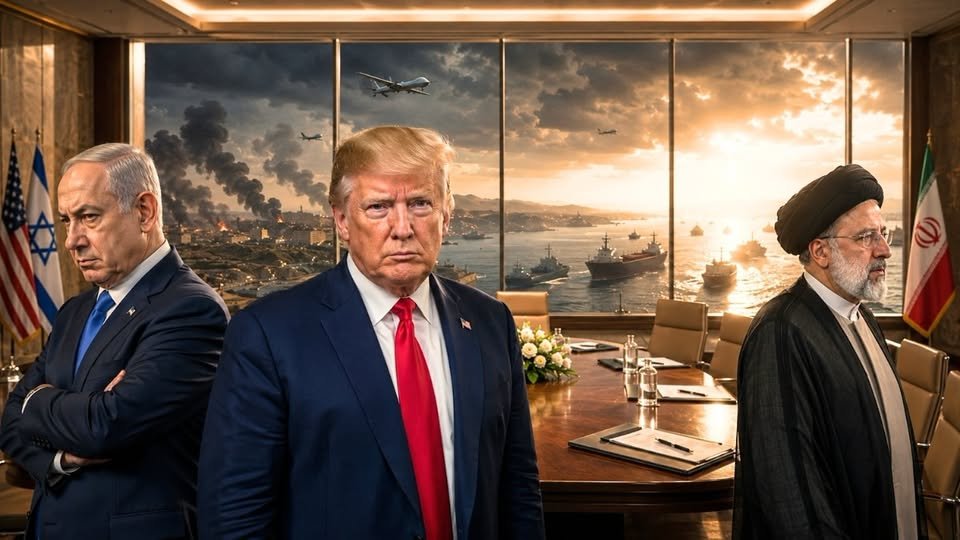
After days of heightened military tensions that rattled financial markets and raised fears of a wider regional conflict, the United States and Iran have agreed to halt further strikes and resume diplomatic talks, marking a significant step toward de-escalation in one of the world’s most strategically important regions. The breakthrough has brought cautious optimism to global markets, with investors closely watching developments surrounding the Strait of Hormuz, a vital artery for global energy supplies.
According to US officials, both nations have agreed to suspend military operations while preparing for fresh negotiations aimed at stabilising the situation and ensuring the uninterrupted movement of commercial shipping through the Gulf. Although analysts caution that the agreement remains fragile, the announcement has eased immediate concerns over a prolonged conflict and its potential economic consequences.
Diplomacy Returns to the Forefront
The understanding follows weeks of military exchanges that threatened to disrupt one of the world’s busiest energy corridors.
The proposed talks are expected to focus on maritime security, safe navigation through the Strait of Hormuz, and broader regional stability. Officials have indicated that discussions will take place in Doha, Qatar, signalling a renewed willingness from both sides to pursue diplomacy over confrontation.
While neither side has described the agreement as a permanent settlement, the decision to stand down is being viewed internationally as an important confidence-building measure.
Markets Welcome Signs of Stability
Financial markets reacted positively to news of the de-escalation.
The possibility of reduced geopolitical risk helped ease concerns around global energy supplies, particularly as the Strait of Hormuz carries a significant share of the world’s seaborne crude oil exports.
Although oil prices remain sensitive to developments in the region, analysts say that avoiding further military escalation reduces the immediate risk of major supply disruptions and supports greater market stability.
Lower geopolitical uncertainty also benefits global equity markets, investor sentiment, and international trade.
Why the Strait of Hormuz Matters
The Strait of Hormuz remains one of the world’s most strategically important waterways.
Any disruption to commercial shipping can quickly influence crude oil prices, inflation, logistics costs, and global supply chains.
For energy-importing countries such as India, stability in the Gulf region is particularly important as it helps maintain predictable energy prices while supporting economic growth.
The latest agreement therefore carries significance well beyond the Middle East, affecting businesses, governments, and consumers worldwide.
A Positive Signal—With Continued Caution
Despite the encouraging breakthrough, geopolitical experts note that the agreement represents a pause rather than a final resolution.
Both countries have experienced periods of renewed tensions following previous understandings, making continued diplomatic engagement essential.
Nevertheless, the willingness to return to negotiations has been widely welcomed by international observers as an important step toward reducing uncertainty in global markets.
Conclusion
The agreement between the United States and Iran to pause military strikes offers a welcome moment of relief for the global economy. By reopening the path to diplomacy and reducing immediate risks around the Strait of Hormuz, the development strengthens hopes for greater regional stability while easing concerns across energy, trade, and financial markets. Although challenges remain, the renewed focus on dialogue represents a positive step toward long-term peace and economic confidence.
For more updates on business, startups, technology, innovation, sustainability, and global developments, visit NewsNowNation at https://newsnownation.com/.
US Iran, US Iran talks, Strait of Hormuz, global oil prices, geopolitical tensions, Middle East, crude oil, global markets, diplomacy, energy security, stock markets, international relations, global economy, peace talks, NewsNowNation

