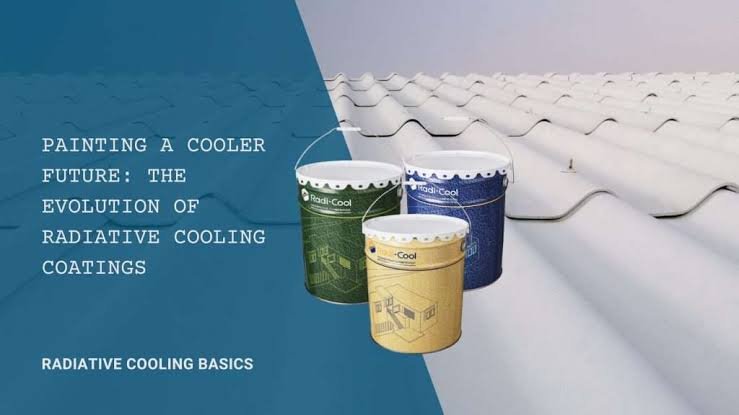
As cities around the world battle record-breaking temperatures and rising energy consumption, a breakthrough in sustainable building technology is beginning to move from research laboratories into real-world construction. Passive radiative cooling paints—innovative coatings capable of keeping buildings cooler without using electricity—are gaining international recognition and are increasingly being referenced in green building standards and modern construction practices.
The technology represents a promising solution for reducing urban heat, lowering cooling costs, and improving energy efficiency at a time when heatwaves are becoming more frequent due to climate change. By reflecting sunlight while simultaneously releasing heat into the atmosphere, these advanced coatings could significantly reduce dependence on air conditioning in homes, offices, schools, hospitals, and commercial buildings.
A New Approach to Cooling Cities
Unlike conventional paints that absorb solar radiation and contribute to rising building temperatures, passive radiative cooling paints are engineered using highly reflective materials capable of bouncing back most incoming sunlight.
At the same time, the coatings emit infrared heat through Earth’s atmospheric window directly into outer space, allowing surfaces to remain cooler than traditional roofing and exterior paints—even under strong sunlight.
Researchers say this dual mechanism can substantially reduce indoor temperatures, particularly in warm and tropical climates where cooling demand is highest.
The technology works continuously without requiring electricity, batteries, refrigerants, or moving mechanical components.
Why It Matters in a Warming World
According to international climate agencies, urban areas are warming faster than surrounding rural regions due to the Urban Heat Island (UHI) effect, where roads, rooftops, and buildings absorb and retain heat.
This leads to:
- Higher electricity consumption
- Increased carbon emissions
- Greater pressure on power grids
- Elevated health risks during heatwaves
- Higher cooling costs for households and businesses
Passive cooling technologies are increasingly being viewed as one of the simplest long-term strategies for reducing these impacts while supporting climate adaptation.
From Research Labs to Building Standards
Until recently, radiative cooling materials remained largely confined to university laboratories and experimental pilot projects.
Today, advances in material science and manufacturing have improved durability, scalability, and commercial viability.
Several countries and green building organizations are now evaluating or incorporating high-performance reflective materials into sustainable construction guidelines, encouraging architects and developers to consider passive cooling as part of energy-efficient building design.
Industry experts believe the technology could become increasingly common in both new developments and renovation projects over the coming decade.
Potential Benefits for India
India experiences some of the world’s highest summer temperatures, making cooling one of the fastest-growing sources of electricity demand.
Passive radiative cooling paints could provide significant advantages across residential, commercial, and public infrastructure.
Possible applications include:
- Homes and apartment buildings
- Schools and universities
- Hospitals
- Warehouses
- Factories
- Metro stations
- Airports
- Government buildings
By reducing roof temperatures, buildings may require less air conditioning, resulting in lower electricity bills and reduced greenhouse gas emissions.
The technology also aligns with India’s broader goals around energy efficiency, sustainable urban development, and climate resilience.
Challenges Ahead
Despite growing interest, passive cooling paints are still an emerging technology.
Researchers continue working to improve durability, cost-effectiveness, weather resistance, and compatibility with different building materials.
Widespread adoption will depend on continued innovation, commercial manufacturing, supportive policies, and increased awareness among architects, developers, and property owners.
Nevertheless, many experts view passive cooling materials as one of the most promising climate adaptation technologies currently under development.
Conclusion
Passive radiative cooling paints demonstrate how material science can address one of today’s biggest environmental challenges without increasing energy consumption. As global temperatures continue to rise, technologies that cool buildings naturally could become essential tools for sustainable urban development.
For countries like India, where extreme heat and growing electricity demand remain major concerns, these innovative coatings offer a glimpse into the future of climate-smart construction—one where buildings stay cooler naturally, reducing costs while protecting both people and the planet.
For more updates on business, startups, technology, innovation, sustainability, and global developments, visit NewsNowNation at https://newsnownation.com/.
Passive Radiative Cooling Paint, Cooling Paint Technology, Sustainable Buildings, Climate Innovation, Green Buildings, Urban Heat Island, Energy Efficient Buildings, Heatwave Solutions, Sustainable Construction, Climate Tech, Cool Roof Technology, Smart Buildings, Renewable Cooling, Environmental Innovation, NewsNowNation

