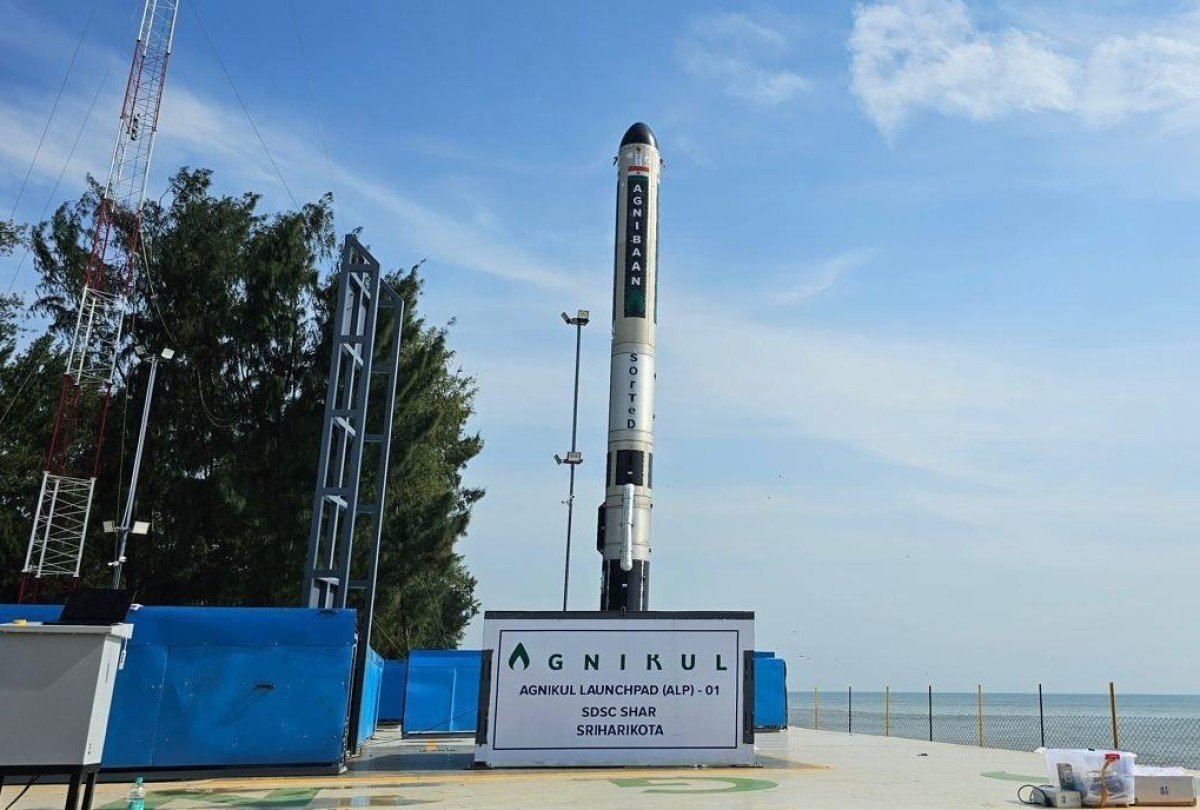
India’s private space industry is entering an exciting new phase of innovation, and Chennai-based AgniKul Cosmos is emerging as one of the companies leading that transformation. Known for developing one of the world’s first single-piece 3D-printed rocket engines and pioneering flexible launch solutions for small satellites, AgniKul is helping position India as a competitive force in the rapidly expanding global commercial space economy.
Backed by strong industry partnerships and supported by India’s evolving space ecosystem, the startup reflects how homegrown innovation is reshaping the country’s ambitions beyond traditional government-led missions. As demand for satellite launches continues to grow worldwide, AgniKul’s technological breakthroughs are strengthening India’s role in next-generation space exploration and commercial launch services.
A New Era for India’s Space Industry
For decades, India’s achievements in space exploration were driven primarily by the Indian Space Research Organisation (ISRO). While ISRO continues to play a central role, recent policy reforms have opened new opportunities for private companies to contribute to the nation’s growing space economy.
This shift has encouraged startups to develop innovative launch vehicles, satellite technologies, propulsion systems, and space infrastructure.
Among these emerging companies, AgniKul Cosmos has attracted international attention for its focus on affordable, flexible, and technology-driven launch solutions.
The company’s progress highlights the growing maturity of India’s private space ecosystem and demonstrates how startups are complementing national space capabilities.
Innovation Through 3D Printing
One of AgniKul’s most notable achievements is its development of a fully integrated, single-piece 3D-printed rocket engine.
Traditional rocket engines often require hundreds of separately manufactured components assembled together. AgniKul’s advanced manufacturing process significantly reduces complexity while improving production efficiency and reliability.
This innovation enables faster manufacturing cycles and supports the company’s vision of delivering responsive launch services for small satellite operators.
Industry experts believe additive manufacturing will play an increasingly important role in the future of aerospace engineering, allowing companies to reduce costs while accelerating product development.
Meeting the Growing Demand for Small Satellite Launches
The global demand for small satellite deployment continues to increase as governments, research institutions, universities, and private companies expand their use of space-based technologies.
Applications such as Earth observation, telecommunications, navigation, agriculture, weather forecasting, disaster management, and scientific research all depend on satellite infrastructure.
AgniKul Cosmos is building launch systems specifically designed to serve this rapidly growing market.
Its flexible launch model aims to provide customers with more frequent launch opportunities while reducing waiting times traditionally associated with larger launch programs.
This customer-focused approach positions the company within one of the fastest-growing segments of the global space industry.
Driving India’s Deep-Tech Ecosystem
AgniKul represents more than a successful startup.
The company reflects the broader evolution of India’s deep-tech ecosystem, where entrepreneurs are tackling highly complex engineering challenges in sectors such as aerospace, artificial intelligence, semiconductors, robotics, and advanced manufacturing.
These industries require long research cycles, specialized talent, and significant technological expertise.
By successfully developing indigenous launch technologies, AgniKul demonstrates the capabilities of India’s engineering talent and reinforces the country’s growing reputation as a global center for innovation.
Its success also encourages greater investor confidence in deep-tech startups pursuing ambitious scientific and industrial goals.
Building the Future of Commercial Space
India’s commercial space sector is expected to expand significantly over the coming years as satellite demand continues to rise globally.
Government initiatives supporting private participation, combined with organizations such as IN-SPACe, have created an environment that encourages innovation while strengthening collaboration between startups and national institutions.
AgniKul Cosmos is well positioned to benefit from this changing landscape.
The company’s continued investment in advanced propulsion systems, launch infrastructure, and manufacturing technologies demonstrates how Indian startups are preparing to compete internationally.
As commercial space activity accelerates worldwide, India’s private sector is expected to play an increasingly important role in supporting global satellite deployment and space technology services.
Conclusion
AgniKul Cosmos is helping redefine India’s role in the global space economy through innovation, engineering excellence, and advanced manufacturing. By developing cutting-edge launch technologies and expanding opportunities for commercial satellite deployment, the startup represents the next generation of Indian deep-tech entrepreneurship.
Its achievements reflect the broader momentum within India’s private space industry, where startups are transforming ambitious ideas into globally competitive technologies. As investment, research, and policy support continue to grow, companies like AgniKul Cosmos are positioning India to become a leading force in the future of commercial space exploration.
For more updates on business, startups, technology, innovation, sustainability, and global developments, visit NewsNowNation at https://newsnownation.com/.
AgniKul Cosmos, Private Space India, Indian Space Startup, Space Technology, Small Satellite Launch, 3D Printed Rocket Engine, Commercial Space, IN-SPACe, Deep Tech India, ISRO, Aerospace Innovation, Indian Startup, Space Economy, Rocket Technology, NewsNowNation

