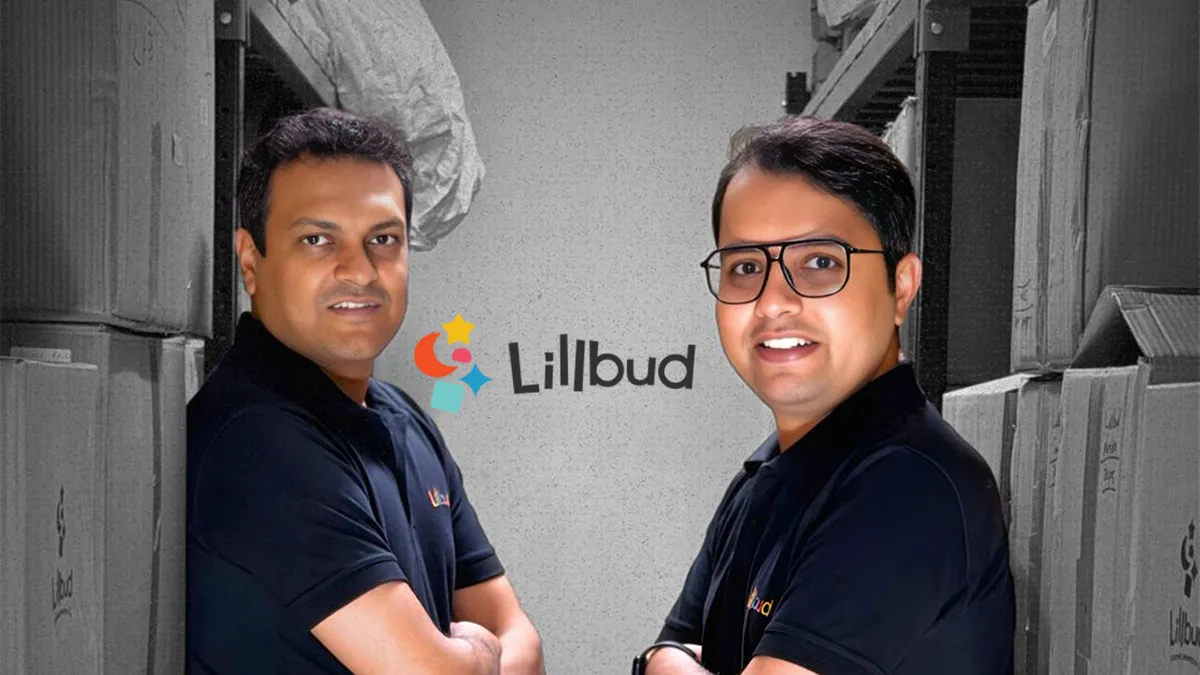
LiLLBUD, an Indian startup focused on children aged 0 to 3 years, has raised Rs 6 crore in a seed funding round led by Zeropearl VC. The round also included angel investors such as Shadowfax CEO Abhishek Bansal, CRED founder Kunal Shah, and a syndicate of consumer and supply-chain professionals.
A Startup Built Around Trust
The company is entering a market where trust is not a luxury. For parents of infants and toddlers, toys and early-learning products are not casual purchases. They touch questions of safety, development, materials, certification, and age appropriateness. LiLLBUD’s positioning is built around that gap: safe, science-backed, developmental products for a child’s earliest years.
According to The Economic Times, LiLLBUD’s catalogue is BIS-certified by design. That is central to the story because safety certification remains a major challenge in India’s toy market. The report notes that BIS certification became mandatory for toys sold in India under the Toys Quality Control Order, 2020, yet an estimated three in ten toys in the formal market still lacked certification as of 2023. Compliance is even harder to track in the unorganized segment.
Why Early Childhood Products Matter
The first three years of childhood are widely recognized as a crucial window for sensory, motor, emotional, and cognitive development. That is why parents increasingly look for products that are not only entertaining but developmentally useful.
India also has a large base of young families. The Economic Times reported that India records about 23 million births a year, the largest birth cohort of any country. The toy market was valued at roughly $2.1 billion in 2025 and is projected to reach about $4.7 billion by 2034, with educational and developmental toys among the faster-growing segments.
LiLLBUD is trying to position itself inside that growth curve, but with a narrower promise: safer, better-designed early-learning products for the youngest age group.
How the Funding Will Be Used
The company plans to use the fresh capital to launch 100 new SKUs across the 18 to 36 months category by Q4 FY26. It also plans to deepen quick-commerce distribution while investing in supply chain and brand building.
That matters because distribution is changing fast in India’s consumer market. Parents increasingly discover and buy products through marketplaces and quick-commerce platforms, not only specialty stores. LiLLBUD is already distributed through its website, Amazon, Flipkart, and Blinkit, according to the report.
Since launching in May 2025, the company has reached an annualized revenue run rate of Rs 3.5 crore and built a catalogue of more than 200 SKUs across developmental categories. For a young consumer brand, that early operating base gives investors a clearer signal than a concept alone.
The Larger Consumer Shift
India’s parenting economy is becoming more informed and more demanding. Urban and digitally connected parents are comparing products, reading labels, asking about certification, and seeking developmental value. At the same time, affordability and access still matter. A company in this space has to balance quality, safety, price, availability, and emotional trust.
LiLLBUD’s story is also startup-friendly because it comes from a real user problem. The company was shaped by founder conversations with parents who felt safe, thoughtfully designed early-learning products were hard to find. That makes the funding round more than a capital update; it reflects the maturing of niche consumer categories in India.
The company’s next test will be execution. Early-childhood products require careful design, reliable sourcing, strong quality checks, and clear parent communication. A product that looks appealing but lacks trust will struggle in this category. A product that combines safety, usefulness, and access can travel quickly across India’s young-family market.
Conclusion
LiLLBUD’s Rs 6 crore seed round highlights a promising area of Indian entrepreneurship: safety-first products for early childhood development. The startup is addressing a market where parents want better options, regulators have raised certification standards, and digital distribution can help new brands scale. If LiLLBUD executes well, it could become part of a new generation of Indian consumer startups built not only on convenience, but on trust.
For more updates on business, startups, technology, innovation, sustainability, and global developments, visit NewsNowNation at https://newsnownation.com/.
LiLLBUD funding, Indian startup funding, early childhood products India, developmental toys India, BIS certified toys, Zeropearl VC, safe toys India, parenting startups India

