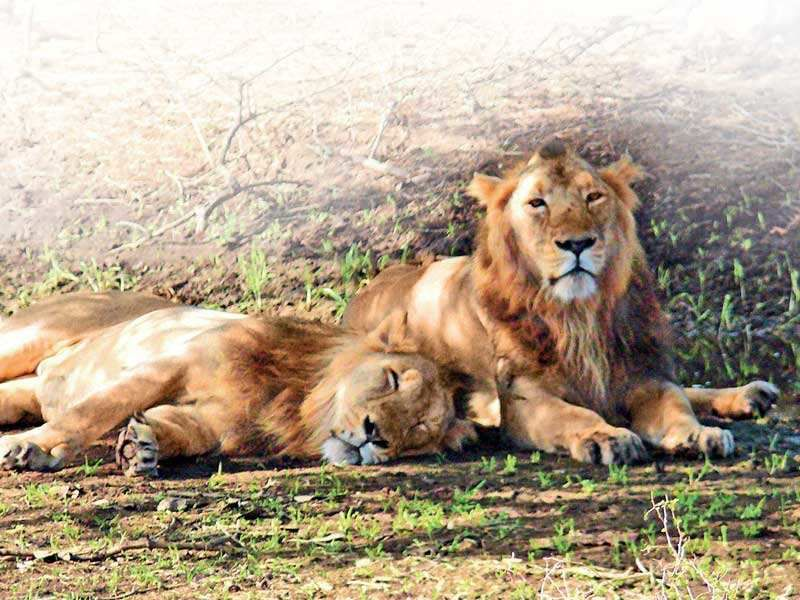
Gujarat Emerges as a Global Model for Wildlife Conservation
Gujarat’s remarkable success in protecting and expanding the population of Asiatic lions has received national recognition, reinforcing India’s position as a global leader in wildlife conservation. The achievement comes as the state’s lion population continues to grow steadily, supported by decades of conservation efforts, scientific management, community participation, and strong environmental policies.
Union Environment Minister Bhupender Yadav recently praised Gujarat’s conservation model, highlighting the state’s consistent efforts in protecting the world’s only wild population of Asiatic lions. The recognition reflects years of coordinated work by wildlife authorities, local communities, conservation experts, and government agencies committed to ensuring the long-term survival of one of India’s most iconic species.
From Near Extinction to Conservation Success
The Asiatic lion, once on the brink of extinction, now stands as one of the most successful wildlife recovery stories in the world. Found naturally only in the Gir landscape of Gujarat, the species has become a symbol of conservation success and ecological resilience.
According to the latest population estimation conducted in 2025, the number of Asiatic lions in the Greater Gir Landscape has reached approximately 891 individuals. This represents a significant increase from the 674 lions recorded in 2020, reflecting an impressive growth of around 32 percent within five years.
The increase is not only a numerical achievement but also an indicator of improved habitat quality, effective wildlife management, stronger protection measures, and successful coexistence between local communities and wildlife.
The Importance of the Gir Landscape
The Gir landscape remains the heart of Asiatic lion conservation. Spread across forests, grasslands, coastal areas, and surrounding habitats, the region supports a diverse ecosystem that provides food, shelter, and breeding opportunities for lions and numerous other wildlife species.
One of the most significant factors behind Gujarat’s conservation success has been its landscape-based approach. Rather than focusing solely on protected areas, authorities have expanded conservation efforts across broader ecological corridors that allow lions to move naturally and establish new territories.
Over the years, the range of Asiatic lions has expanded beyond traditional boundaries, spreading across multiple districts in the Saurashtra region. This expansion reflects both population growth and the effectiveness of habitat management strategies implemented by the Gujarat Forest Department.
Community Participation Driving Conservation
Community participation has also played a crucial role in conservation efforts. Local communities living around the Gir landscape have developed a unique relationship with wildlife, particularly lions. Awareness programs, compensation mechanisms, eco-development initiatives, and sustainable livelihood opportunities have helped strengthen cooperation between conservation authorities and residents.
The success of lion conservation in Gujarat demonstrates how environmental protection and economic development can coexist. Wildlife tourism associated with the Gir ecosystem contributes significantly to local economies by creating employment opportunities and supporting businesses linked to hospitality, transportation, and tourism services.
Scientific Management and Conservation Initiatives
Conservation experts frequently cite Gujarat’s model as an example of how long-term planning, scientific monitoring, and public participation can contribute to species recovery. The state’s approach combines modern wildlife management practices with traditional community engagement, creating a sustainable framework for conservation.
Several initiatives have further strengthened conservation efforts. These include habitat restoration programs, prey-base management, anti-poaching measures, veterinary care systems, disease surveillance, rescue operations, and advanced monitoring technologies used to track lion populations and movement patterns.
The Government of India’s Project Lion initiative has also contributed to strengthening long-term conservation planning. The program focuses on habitat improvement, ecological resilience, scientific research, and population management to ensure the continued growth and protection of Asiatic lions.
Global Recognition for Gujarat’s Conservation Model
The international conservation community has increasingly recognized the significance of Gujarat’s achievements. While lion populations have declined in several parts of the world due to habitat loss, poaching, and human-wildlife conflict, the steady recovery of the Asiatic lion population stands out as a positive example of successful species conservation.
Beyond protecting a single species, lion conservation contributes to broader ecosystem health. As apex predators, lions play a critical role in maintaining ecological balance by regulating prey populations and supporting biodiversity throughout the food chain.
Strengthening India’s Biodiversity Leadership
The conservation success also strengthens India’s reputation as a leader in biodiversity protection. Alongside initiatives such as Project Tiger, Project Elephant, and the International Big Cat Alliance, Gujarat’s lion conservation model showcases India’s commitment to preserving wildlife and natural heritage.
The recognition received by Gujarat serves as a reminder that conservation success requires sustained effort, scientific planning, and collaboration across multiple stakeholders. It demonstrates that meaningful environmental outcomes can be achieved when governments, communities, researchers, and conservation organizations work together toward a common goal.
Lessons for Global Wildlife Conservation
As global biodiversity faces increasing pressure from climate change, habitat fragmentation, and human activity, stories like Gujarat’s offer valuable lessons for wildlife conservation worldwide. The continued growth of the Asiatic lion population reflects not only effective management but also a broader commitment to protecting natural ecosystems for future generations.
With nearly 900 lions now thriving in the Greater Gir Landscape, Gujarat’s achievement stands as one of the most inspiring wildlife conservation success stories of recent decades. It represents a victory for biodiversity, ecological sustainability, and the long-term protection of one of India’s most treasured species.
For more updates on business, sustainability, environment, economy, startups, and policy developments, follow News Now Nation at www.newsnownation.com.

