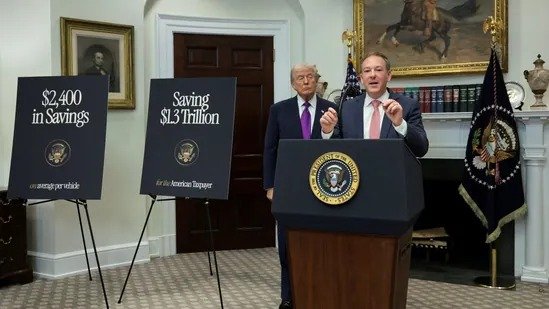
In a move described as the “largest deregulatory action in American history,” the Trump administration, led by President Donald J. Trump and EPA Administrator Lee Zeldin, has officially announced the repeal of significant Obama-era climate regulations. This decision is set to fundamentally change the automotive landscape in the United States, with the White House claiming it will save American families an average of $2,400 on the purchase of a new vehicle.
The core of this announcement is the rescinding of the 2009 “Endangerment Finding,” a legal pillar that allowed the Environmental Protection Agency (EPA) to regulate greenhouse gas emissions from motor vehicles. By overturning this finding, the administration is effectively neutralizing the federal greenhouse gas (GHG) emission standards for model years 2012 through 2027 and beyond.
According to the White House and the EPA, these regulations imposed a “hidden tax” on consumers. By removing the requirements to measure, report, and comply with strict emission standards, automakers will see a reduction in production costs. The administration projects that these savings—estimated at over $1.3 trillion in total regulatory relief—will be passed directly to the consumer, lowering the sticker price of cars, SUVs, and trucks by over $2,400 on average.
Beyond the financial savings, the administration emphasizes “Consumer Choice.” One of the most talked-about changes is the elimination of credits for the “start-stop” engine feature, which many drivers found frustrating. The new policy aims to shift the market back toward what consumers actually want to buy, rather than what the government mandates they should drive. This includes a renewed focus on affordable internal combustion engine (ICE) vehicles over the heavily subsidized electric vehicle (EV) mandates of the previous administration.
White House Press Secretary Karoline Leavitt and Secretary of Transportation Sean Duffy have highlighted that more affordable cars mean safer roads. When new vehicles are cheaper, families can replace older, less-safe models more quickly. Additionally, the move is expected to bolster U.S. manufacturing and protect jobs by reducing the compliance burden on domestic automakers.
While environmental groups express concern over the long-term impact on carbon emissions, the Trump administration remains firm: the priority is the “American Dream” of affordable mobility. With a $2,400 price drop on the horizon, this deregulatory wave marks a significant victory for the American taxpayer’s wallet
