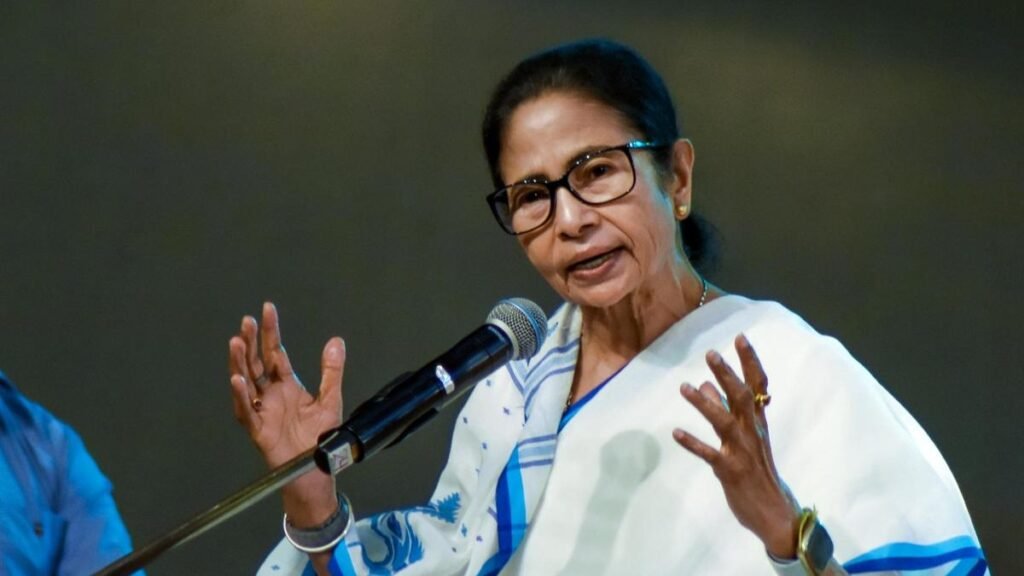
West Bengal Chief Minister Mamata Banerjee has once again sparked a heated debate over federalism and regional identity following the Union Cabinet’s approval to rename Kerala as “Keralam”. While congratulating the people of the southern state, Banerjee expressed her deep frustration over the Centre’s repeated refusal to approve West Bengal’s long-standing proposal to change its name to “Bangla”. She alleged that the delay is a sign of “vindictive discrimination” against the state.
One of the primary reasons cited by the Chief Minister for the name change is the practical difficulty faced by the state due to the letter ‘W’. In alphabetical listings for national meetings, student examinations, and recruitment interviews, West Bengal consistently appears at the very bottom.
“When our students go for exams, they are called at the end. I too face the same problem; I get the chance to speak last in meetings because the name begins with ‘W’,” Banerjee stated in a video message. A change to “Bangla” would move the state significantly higher in alphabetical order.
The Trinamool Congress (TMC) supremo did not hold back in her political critique. She claimed that Kerala’s proposal was cleared due to an “under-the-table understanding” between the BJP and the CPI(M) ahead of the upcoming assembly polls. Branding the Centre as “anti-Bengal” and “Bangla-Birodhi,” she accused Prime Minister Narendra Modi and Home Minister Amit Shah of using the word ‘Bangla’ only during elections to gain votes while disrespecting the state’s icons and culture.
The demand for renaming the state is not new. The West Bengal Legislative Assembly has passed resolutions seeking the name change twice—once in 2016 and again in July 2018. The 2018 resolution proposed the name “Bangla” across all three languages: Bengali, Hindi, and English. However, the Ministry of External Affairs had previously raised concerns that the name “Bangla” sounded too similar to the neighboring country, Bangladesh. Despite multiple meetings between Banerjee and top central leadership, the proposal has remained pending for years.
“They won’t be in power forever. One day, we will get the name changed,” a defiant Mamata Banerjee vowed. As West Bengal and Kerala both head towards assembly elections, the issue of regional pride and naming has become a central theme in the political narrative. The debate over ‘Bangla’ vs ‘West Bengal’ is no longer just about geography; it has become a symbol of the ongoing struggle between the state government and the central command.
Stay tuned to NewsNowNation.com for the latest political developments and national news.
