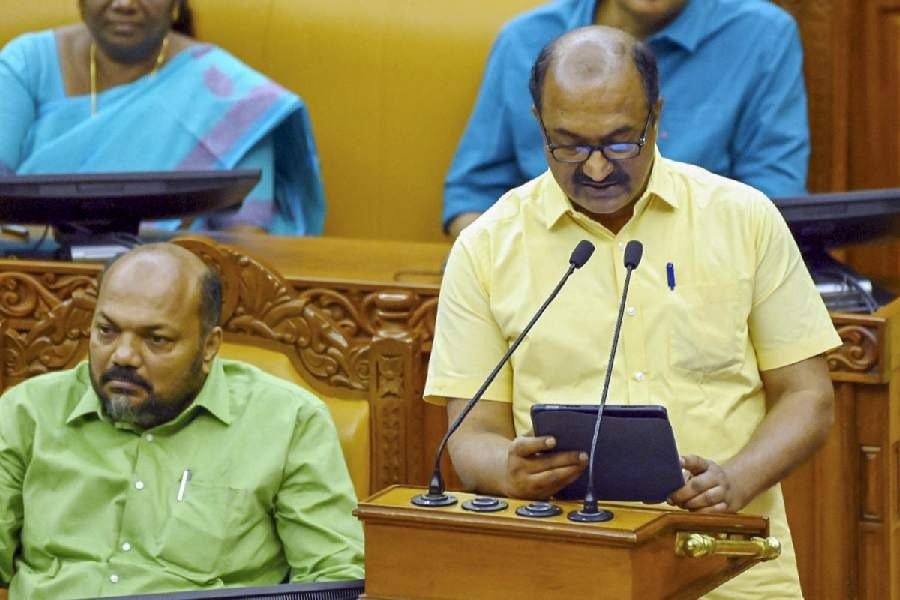
For decades, the “Kerala Model” has been celebrated globally. High literacy rates, exceptional healthcare access, and strong social welfare nets made the southern Indian state a benchmark for human development. However, the narrative is gradually shifting. Recent financial assessments, including the state’s latest Economic Survey, reveal a stark reality: Kerala is currently veering from its impressive social gains into a period of significant fiscal strain. The core dilemma for the state government is clear—how to control mounting public expenditure without dismantling the very pro-social policies that define Kerala’s identity and governance.
Kerala’s commitment to its people has always come at a premium. Unlike many other states, a massive portion of its budget is dedicated to the social sector, particularly education, healthcare, and welfare pensions. While this investment has resulted in a high quality of life and a per capita income well above the national average, it has also created a highly rigid expenditure structure. The recurring, committed costs of government salaries, pensions, and interest payments on past loans consume the lion’s share of the state’s revenue. This leaves very little fiscal room for capital expenditure, infrastructure development, or industrial investments that could generate future revenue.
The fiscal math is becoming increasingly difficult to balance. According to recent data tabled in the state assembly, Kerala’s fiscal deficit widened to 3.86% of its Gross State Domestic Product (GSDP) in 2024–25, a noticeable jump from 3.02% in the previous year. Similarly, the revenue deficit saw a sharp increase, rising from 1.6% to 2.49% of the GSDP.
These widening deficits are the result of a perfect storm: stagnant domestic revenue growth combined with a noticeable decline in financial transfers from the central government. When total revenue receipts grow by a mere 0.3% while expenditures shoot up by nearly 9%, the state is forced to rely on heavy borrowing to bridge the gap. Consequently, public debt has escalated rapidly, creating a cycle where a significant portion of new borrowings is utilized simply to service the interest on older debts.
The relationship between state finances and central allocations remains a major friction point. Kerala has consistently argued that changes in the Finance Commission’s devolution formulas have unfairly penalized the state for its early success in population control and demographic management. Although the 16th Finance Commission recently hiked Kerala’s share in the divisible tax pool slightly to 2.38%, the absence of recommended revenue deficit grants puts additional, immediate pressure on the state treasury. With reduced central support and strict borrowing limits enforced by the Union government, Kerala’s debt sustainability is under intense scrutiny.
Successive governments in Thiruvananthapuram have faced the exact same challenge: cutting costs is politically and socially sensitive. Reducing welfare pensions, pausing salary revisions, or downsizing the government workforce invites immediate backlash and industrial action. Yet, continuing on the current trajectory risks a fiscal trap that could paralyze future economic expansion.
Furthermore, while the state boasts a high per capita income of ₹1.90 lakh, this growth masks underlying pressures. High unemployment rates among the educated youth remain a persistent issue, driving outward migration and leaving the state heavily reliant on remittance income, which itself is subject to global economic fluctuations.
To secure its future, the state must focus on expanding its revenue base beyond its traditional, narrow sources like alcohol taxation and state lotteries. Encouraging robust private investment, boosting the IT and manufacturing sectors, and modernizing tax collection are critical steps. There also needs to be a serious, pragmatic debate on targeting welfare schemes more effectively. Transitioning from universal subsidies to targeted financial assistance ensures that benefits reach those who truly need them, without unnecessarily draining the exchequer.
Kerala stands at a critical crossroads. The state’s social achievements are undeniable and must be protected, but they cannot be sustained by ignoring the balance sheet. The transition from a welfare-first approach to a balanced, growth-oriented fiscal policy will require tough political decisions and transparent public discourse. For Kerala to maintain its status as a development model, it must prove that social equity and fiscal responsibility can coexist.
Stay tuned to NewsNowNation.com for more in-depth analyses on state economies and national policies.
