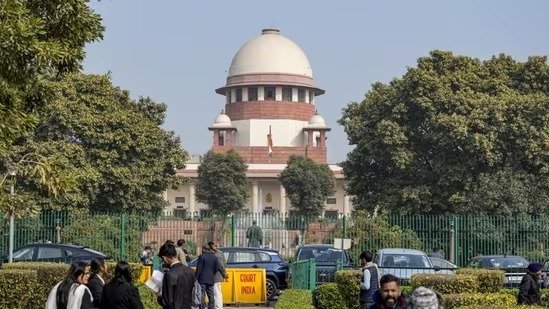
In a landmark observation that could redefine electoral politics in India, the Supreme Court has once again raised a red flag over the culture of “freebies” promised by political parties during elections. The apex court expressed grave concern, stating that such populist measures are not just a fiscal burden but a significant roadblock to the nation’s long-term economic development. The court’s remarks come at a time when several states are struggling with mounting debt, fueled by competitive populism.
The bench, while hearing a petition against the distribution of irrational freebies, noted that there is a thin line between welfare measures and populist giveaways. The court clarified that while genuine welfare schemes for the underprivileged are essential, “irrational freebies”—such as free gadgets, electricity beyond a certain limit, or cash transfers without a developmental logic—hamper the state’s capacity to invest in infrastructure, healthcare, and education. The Supreme Court emphasized that taxpayers’ money should be used for building assets, not for securing temporary electoral gains.
One of the most critical points raised was the impact on the economy. The court pointed out that when a significant portion of the budget is diverted toward freebies, the fiscal deficit widens. This lead to a cycle of borrowing that eventually puts the state’s economy at risk of collapse. Central bank reports have previously warned that the “freebie culture” could push some Indian states toward a crisis similar to those seen in neighboring economies. The Supreme Court’s stance reinforces the idea that economic health must take precedence over political survival.
The court also deliberated on the role of the Election Commission of India (ECI). It questioned whether the ECI should have more powers to regulate such promises in election manifestos. While political parties argue that these are “welfare measures,” the court is pushing for a standardized definition to ensure that the promise of freebies does not tilt the level playing field during polls.
The Supreme Court has suggested the formation of a specialized body—including representatives from the Finance Commission, NITI Aayog, and the RBI—to look into the fiscal impact of these promises. This move highlights the need for a national consensus on what constitutes a “welfare scheme” versus a “freebie.”
The Supreme Court’s intervention is a timely wake-up call for the Indian political class. Sustainable development cannot be built on the foundation of free gifts; it requires rigorous fiscal discipline and long-term vision. As the debate continues, the focus must remain on empowering the citizens through education and opportunity rather than dependency.
For more in-depth legal and economic analysis, stay tuned to NewsNowNation.com.
