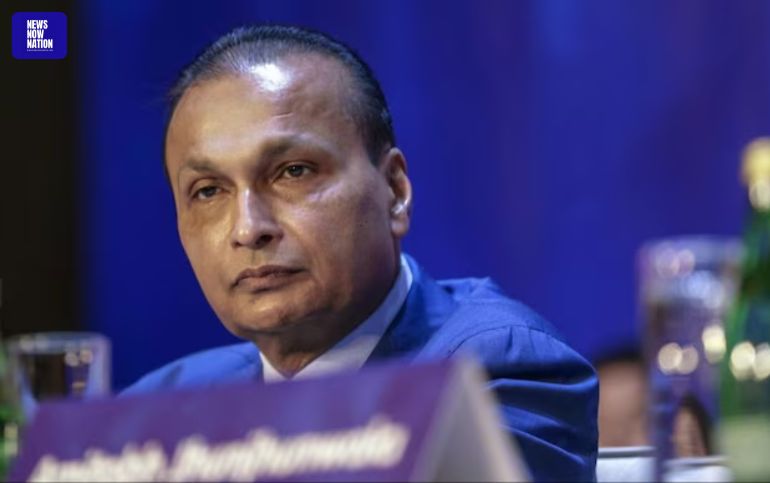
In a landmark decision, the Securities and Exchange Board of India (Sebi) has imposed a 5-year trading ban on Anil Ambani, one of India’s most prominent industrialists. The ban stems from allegations of a fraudulent scheme orchestrated by Ambani and top executives of Reliance Home Finance Limited (RHFL). The regulatory authority has also levied a hefty fine of Rs 25 crore on Ambani, marking one of the most significant penalties in recent memory.
The trading ban on Anil Ambani is not just limited to his personal trading activities. Sebi’s order also prohibits him from holding any position as a director or Key Managerial Personnel (KMP) in any listed company or intermediary registered with Sebi for a period of five years. This ban effectively sidelines Ambani from the securities market, a sector where he once held significant influence.
Background of the Case
The 222-page final order released by Sebi provides a detailed account of how Anil Ambani and key officials at RHFL orchestrated a complex scheme to siphon off funds from the company. According to the order, these funds were diverted under the guise of loans to various entities connected to Ambani. Despite repeated directives from RHFL’s Board of Directors to halt such lending practices, the management, under Ambani’s leadership, ignored these instructions and continued with the scheme.
The Sebi investigation revealed that loans worth hundreds of crores were approved for companies with little to no assets, cash flow, or revenue. These companies, most of which were linked to Ambani, were essentially conduit borrowers—entities that lacked the financial capacity to repay the loans. As expected, most of these borrowers defaulted, leading to RHFL’s own debt default. This eventually triggered RHFL’s resolution under the Reserve Bank of India’s (RBI) Framework for Resolution of Stressed Assets.
The Fraudulent Scheme
Sebi’s order details how Anil Ambani leveraged his position as the “chairperson of the ADA group” to execute this fraudulent scheme. His indirect shareholding in RHFL’s holding company gave him the necessary influence to push through these questionable loans. The investigation revealed that the loans were approved without adequate due diligence, and many of the recipient companies were not creditworthy.
The fraudulent activities had severe consequences for RHFL and its shareholders. The share price of RHFL, which was Rs 59.60 in March 2018, plummeted to a mere Rs 0.75 by March 2020 as the extent of the fraud became public. This dramatic decline in share value resulted in significant losses for public shareholders, including over 9 lakh investors.
Penalties Imposed
In addition to the trading ban on Anil Ambani, Sebi has imposed penalties on 24 other entities involved in the fraudulent scheme. These include former key officials of RHFL, such as Amit Bapna, Ravindra Sudhalkar, and Pinkesh R Shah, who played crucial roles in executing the fraud. The penalties imposed on these individuals are substantial, with Bapna fined Rs 27 crore, Sudhalkar Rs 26 crore, and Shah Rs 21 crore.
Moreover, Sebi has also imposed fines of Rs 25 crore each on several other entities connected to the fraud. These entities include Reliance Unicorn Enterprises, Reliance Exchange Next Ltd, Reliance Commercial Finance Ltd, Reliance Cleangen Ltd, Reliance Business Broadcast News Holdings Ltd, and Reliance Big Entertainment Pvt Ltd. According to Sebi, these companies were either direct recipients of the siphoned funds or intermediaries in the diversion of RHFL’s resources.
Broader Implications
The trading ban on Anil Ambani has far-reaching implications, not just for Ambani himself but also for the broader corporate governance landscape in India. This case serves as a stark reminder that even the most influential industrialists are not above the law. Sebi’s stringent action against Ambani and the other entities involved signals the regulator’s intent to clamp down on corporate fraud and protect the interests of investors.
Sebi’s order also raises questions about the role of corporate governance in preventing such fraudulent activities. Despite clear directives from the RHFL Board of Directors, the management, under Ambani’s leadership, continued with the fraudulent scheme. This case highlights the need for stronger checks and balances within companies to prevent the concentration of power in the hands of a few individuals.
Conclusion
The trading ban on Anil Ambani marks a significant chapter in India’s corporate history. Sebi’s decisive action against Ambani and the other entities involved in the RHFL fraud sends a clear message that fraudulent activities will not be tolerated, regardless of the stature of the individuals involved. As the fallout from this case continues to unfold, it serves as a crucial lesson in the importance of corporate governance and regulatory oversight in maintaining the integrity of the securities market.
The case also underscores the need for investors to remain vigilant and conduct thorough due diligence before investing in companies. With the imposition of such heavy penalties, Sebi aims to restore confidence in the market and ensure that similar fraudulent activities do not occur in the future.
Stay tuned to News Now Nation for updates and more news
Follow us on social media for real-time news updates:

