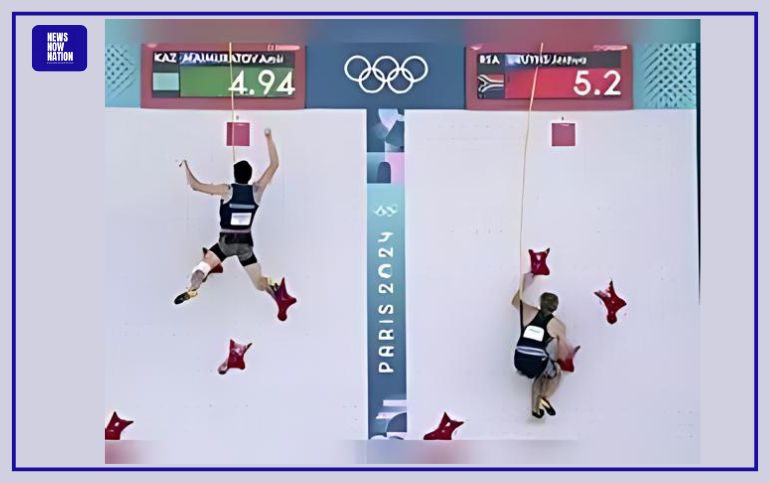
US climber Sam Watson, an 18-year-old sensation, has set a new wall climb record by scaling a 15-meter wall in just 4.75 seconds at the Olympics. This remarkable achievement in speed climbing has caught the attention of sports enthusiasts worldwide.
In speed climbing events, spectators need to stay alert as athletes can climb the 15-meter wall in roughly five seconds. Sport climbing made its Olympic debut at the Tokyo Games in 2021, having first appeared on the Olympic radar during the Buenos Aires Youth Olympic Games in 2018. Alongside skateboarding and surfing, sport climbing aims to attract younger audiences and will continue to be part of the program for the Los Angeles 2028 Summer Olympics.
What is Olympic Sport Climbing?
Olympic sport climbing includes three main disciplines: bouldering, lead, and speed.
- Bouldering: Athletes climb a 4.5-meter wall without ropes, aiming to reach the top in the fewest attempts within a limited time.
- Lead: In six minutes, climbers try to reach the top of a 15-meter wall.
- Speed: Climbers compete in one-on-one elimination rounds and timed races, scaling a 15-meter wall with a five-degree incline. Top male climbers complete the climb in less than six seconds, while the best female climbers typically finish in under seven seconds.
Changes from Tokyo 2021
In the current Games, speed climbing is a standalone event, while bouldering and lead remain combined. This allows climbers to focus on their specialties. The scoring system has also been updated. Unlike Tokyo, where scores from each discipline were multiplied for a final score, the new system awards up to 200 points for bouldering and lead.
- Bouldering: By moving through different areas of the wall and arriving at the summit hold, climbers can earn points. Points are deducted for attempts. A perfect round, where climbers solve four boulder problems on their first try, earns 100 points.
- Lead: Athletes earn points by holding onto a maximum of 40 holds; the more holds they manage, the higher they score. Even if the grip is not firmly grabbed, advances toward the next hold are still worth partial points.
Olympics Climbing Competition Structure
Twenty women and twenty men compete in lead and bouldering. There are 14 men and 14 women that compete in speed climbing. They run two speed runs on various walls, and the pairings for the elimination rounds are determined by rating each run according to fastest time.
Speed Climbing Record
As of Tuesday, 18-year-old Sam Watson from Texas holds the record for the fastest-ever Olympic climb. Watson set a world record of 4.75 seconds in speed climbing at a temporary wall in the Parisian suburbs. Speed climbing demands intense focus, with athletes racing up the 15-meter wall in about five seconds toward the red buzzer at the top.
The new wall climb record by Sam Watson has not only elevated the profile of sport climbing but also set a new benchmark for future competitors. This young athlete’s extraordinary performance continues to inspire climbers and sports fans around the world.
Stay tuned to News Now Nation for updates and more news.
Follow us on social media for real-time news updates:

