Breakthrough Study on Moon’s Interior and Future Missions
India’s space research efforts have received a major boost as scientists from the Indian Institute of Technology Kharagpur and Physical Research Laboratory have decoded crucial details about titanium-rich rocks found on the Moon. The findings are expected to play a significant role in shaping the upcoming Chandrayaan-4 mission, which aims to bring lunar samples back to Earth for detailed analysis.
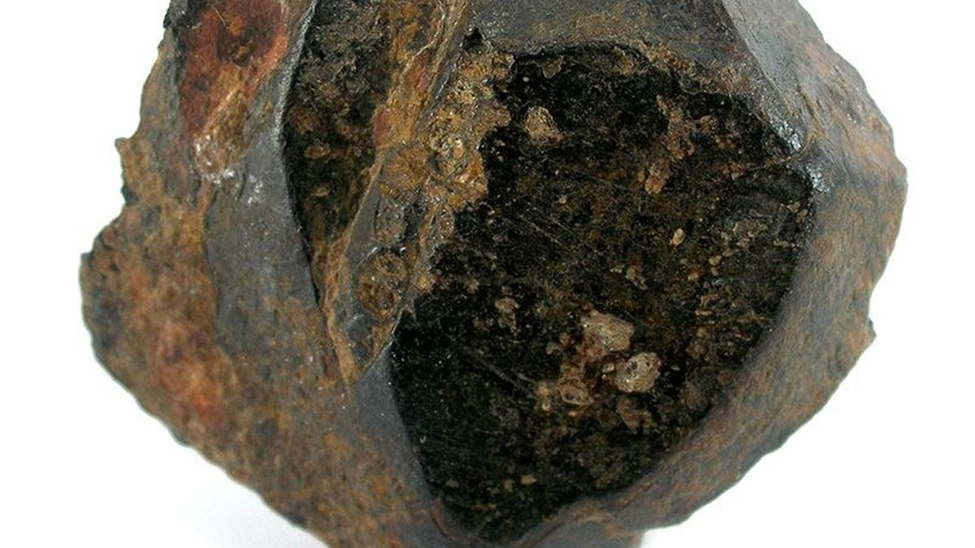
The study focuses on a rare category of lunar rocks known as ilmenite-bearing cumulates, which are rich in iron and titanium. These rocks are believed to have formed around 4.3 to 4.4 billion years ago, during a period when the Moon was covered by a vast ocean of molten material.
As this molten ocean cooled, dense mineral layers sank into the Moon’s interior, preserving valuable information about its early geological evolution. Scientists have long been trying to understand how these materials behave and what they reveal about the Moon’s formation.
To investigate this, researchers conducted laboratory experiments simulating extreme conditions found deep within the Moon. The samples were subjected to high pressures and temperatures exceeding 1,500°C, allowing scientists to observe how these titanium-rich rocks melt and interact with surrounding materials.
The experiments revealed that these rocks can generate different types of magma depending on temperature conditions. At higher temperatures, moderately titanium-rich melts are formed, while lower temperatures produce even more titanium-rich compositions before mixing with other materials.
This complex process explains the presence of high-titanium basalts observed on the Moon’s surface during previous missions. Understanding these formations is crucial for interpreting data collected by lunar missions and planning future exploration strategies.
Another important finding of the study is related to the movement of magma within the Moon’s interior. Scientists observed that under certain conditions, molten material can rise toward the surface, contributing to volcanic activity. In other cases, the material may sink back into the mantle, indicating a dynamic internal system within the Moon.
These insights provide a clearer picture of the Moon’s geological processes and help scientists better understand its internal structure and history.
The findings come at a crucial time as India prepares for the Chandrayaan-4 mission, which is expected to be one of the country’s most ambitious space projects. Unlike previous missions, Chandrayaan-4 aims to collect lunar samples and bring them back to Earth for detailed scientific study.
This makes it essential to identify the most scientifically valuable regions on the Moon’s surface. The new research will help scientists determine where titanium-rich materials are located and how they can be studied effectively.
The study also enhances the interpretation of data collected by orbiters and landers, allowing scientists to make more accurate predictions about the Moon’s composition. This will play a key role in selecting landing sites and ensuring the success of future missions.
India’s space program has been gaining global recognition, especially after the success of Chandrayaan-3. The latest research demonstrates how scientific studies conducted on Earth can directly contribute to advancements in space exploration.
Experts believe that such discoveries will not only strengthen India’s position in global space research but also contribute to a deeper understanding of planetary science.
The research also highlights the importance of collaboration between academic institutions and research organizations in advancing scientific knowledge. By combining theoretical studies with experimental data, scientists are able to uncover new insights into the formation and evolution of celestial bodies.
As the world moves toward more advanced space missions, understanding the Moon’s geology becomes increasingly important. The knowledge gained from this study will not only support Chandrayaan-4 but also future missions aimed at exploring other planetary bodies.
With growing interest in lunar exploration, countries around the world are focusing on the Moon as a key destination for scientific research and potential resource utilization. India’s latest findings place it at the forefront of this global effort.
The breakthrough serves as a reminder that space exploration is not just about reaching new destinations but also about understanding the fundamental processes that shape our universe.
Follow for more updates regarding business related news in newsnownation.com.
